

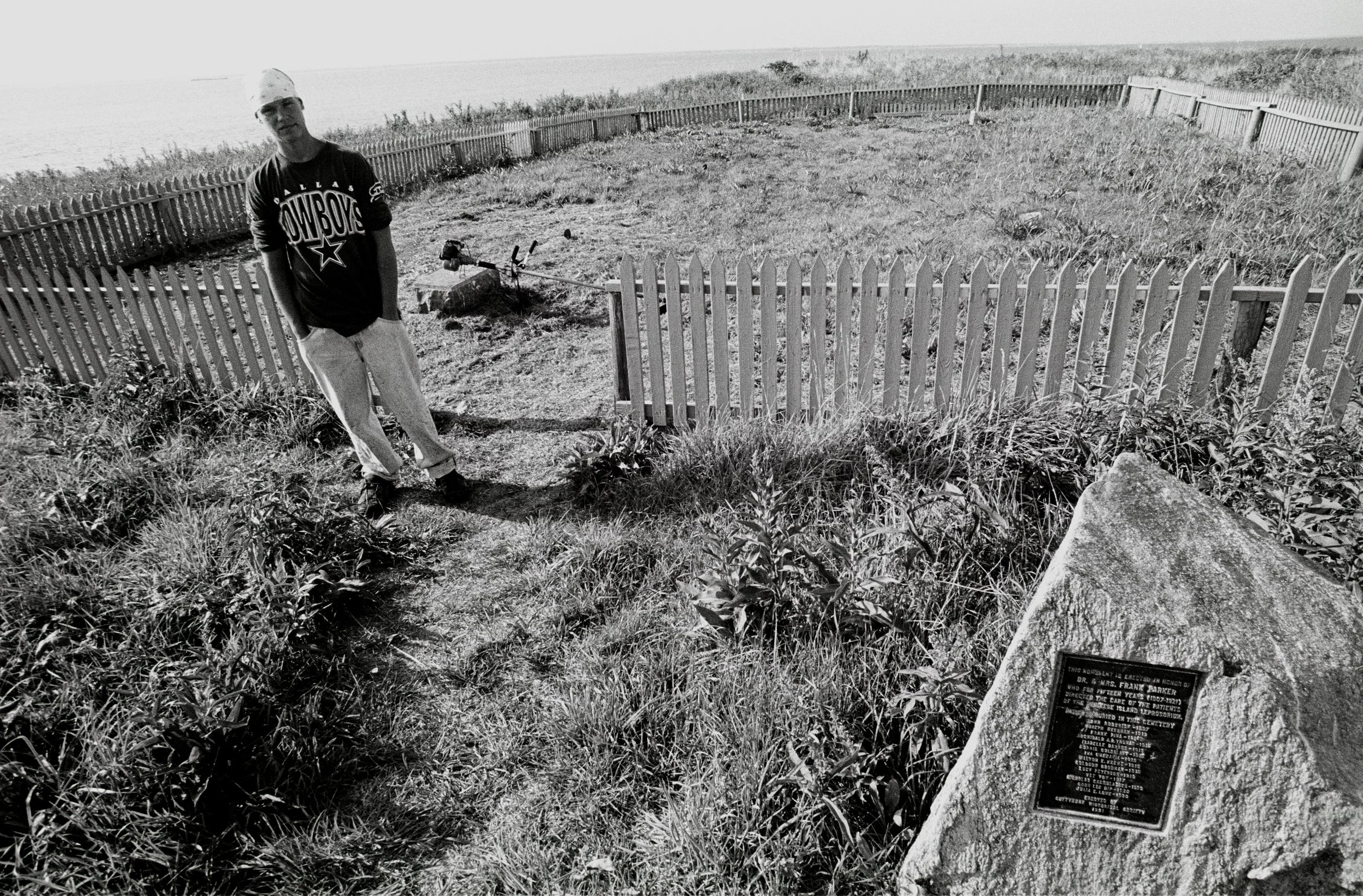
JON STRIMS THE GRASS IN THE LEPER CEMETERY
Some previous Penikese inhabitants were also social outcasts. Between 1905 and 1921, the island was a leper colony, one of only three in America then
The colony was contentious as the lepers were mostly poor immigrants, disliked by the conservative Bostonians who governed the state. For many of the lepers, the colony was a detention centre and they were prisoners. ‘Just like us’, the island’s current inmates said. ‘At least you get to go’, Robb had suggested. ‘Yeah, not soon efuckin’nough’, one retorted
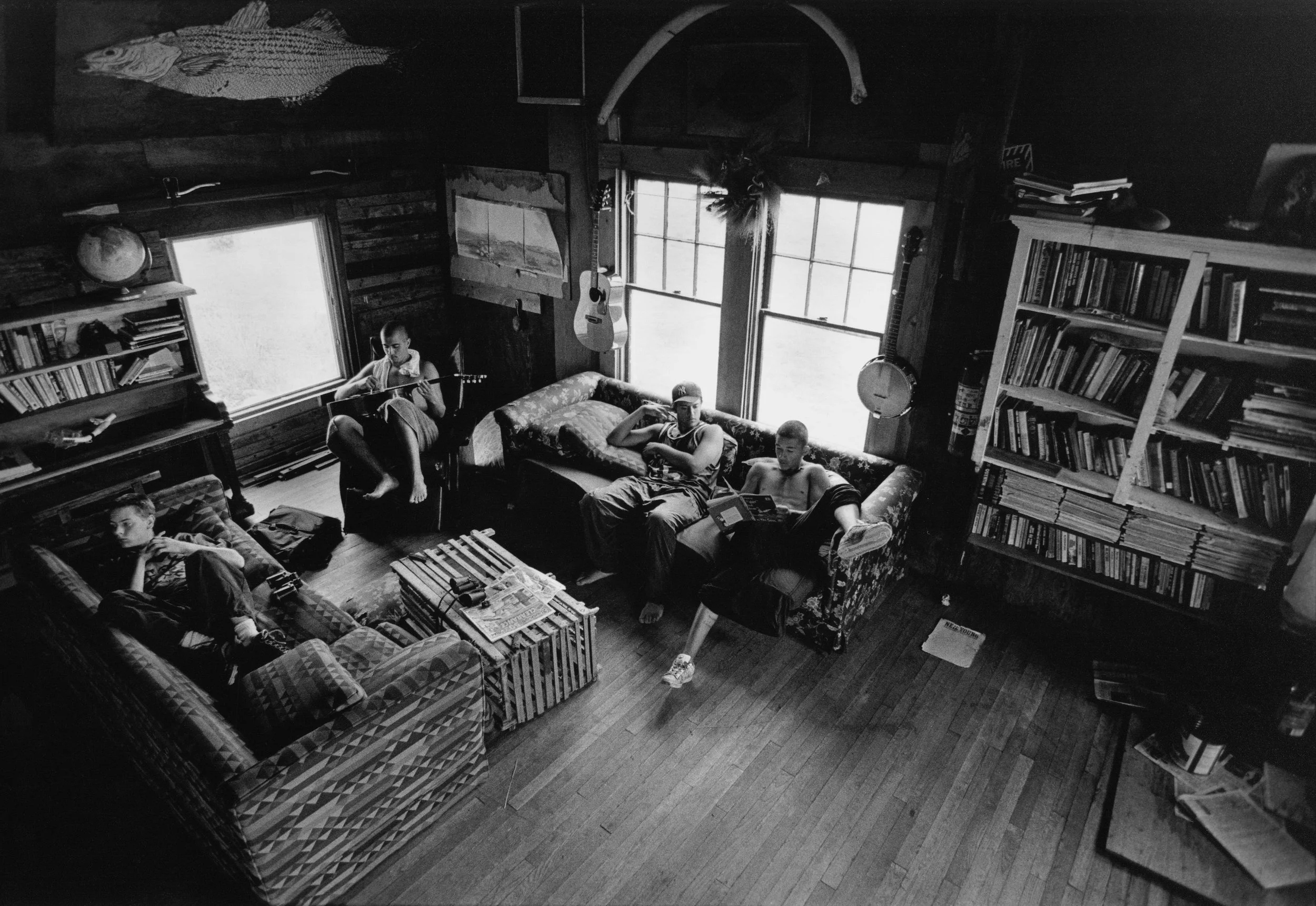
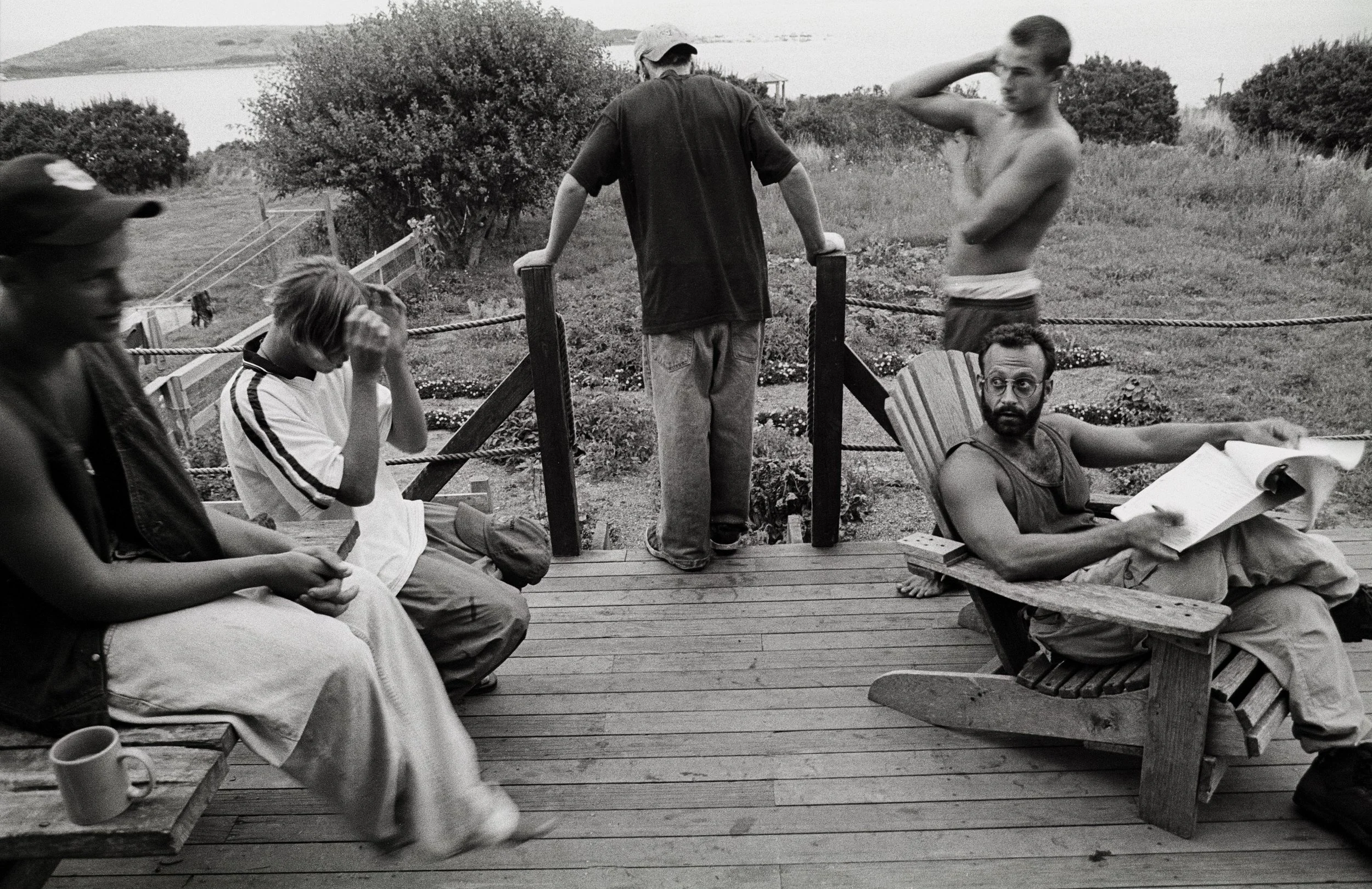
TIME OFF IN THE LIVING ROOM
With no TV, or mobile phones, a book of sorts gets glanced at. Children who could barely read could begin to think differently
The school was constructed from driftwood washed up on the beaches—perhaps even from the timbers of ancient shipwrecks. The large fish and the old whale-bone were constant reminders of being out at sea on an island not even half a mile long or wide. With just each other, everyone had to muck in
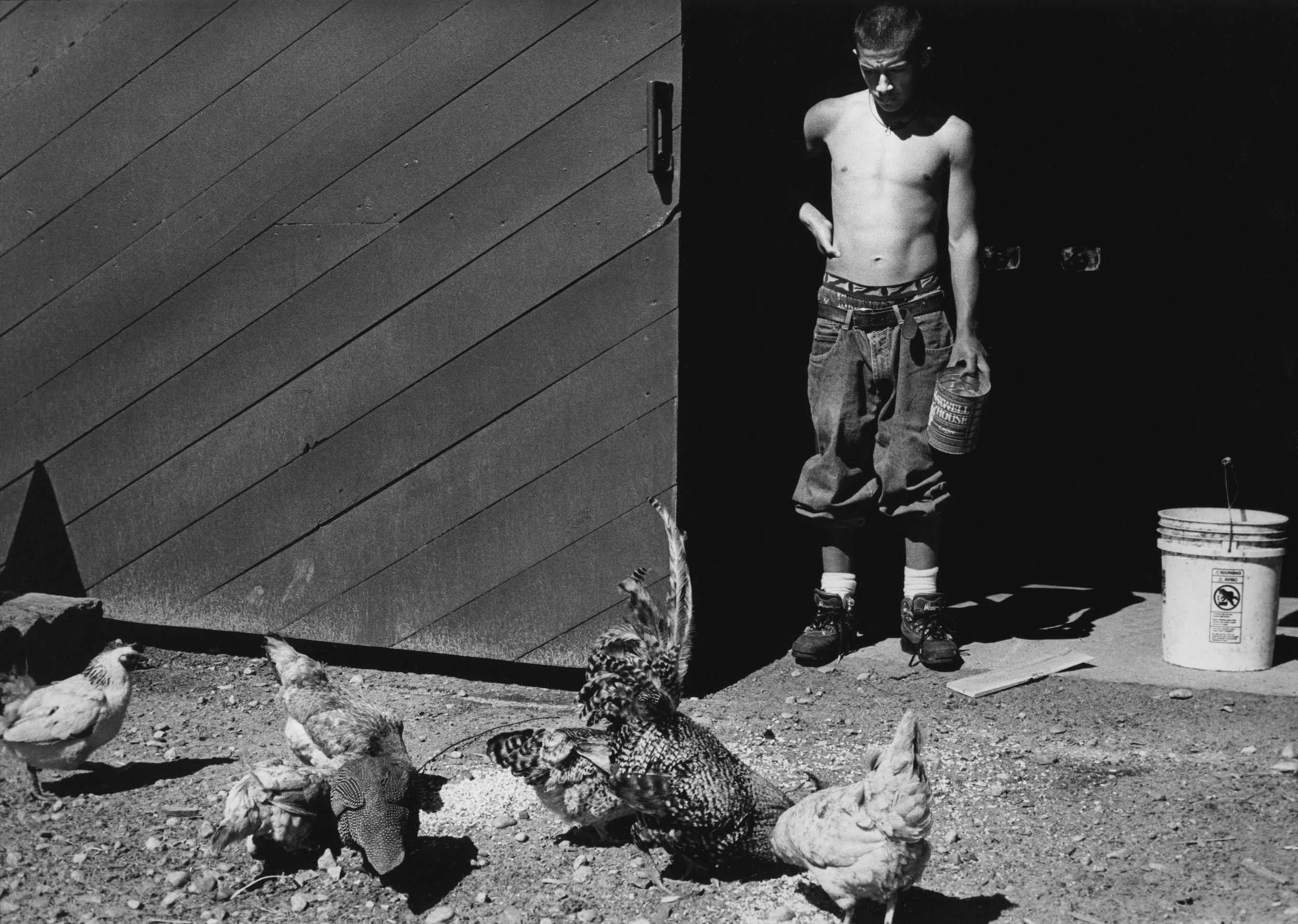
FEEDING THE CHICKENS
Days were much like life on a nineteenth-century farm: the boys harvested food, chopped wood to stay warm, and looked after farm animals. Each boy could see how his contribution was vital to them all. Some felt a sense of purpose in themselves for the first time
All the boys had been harmed by neglectful parents. On the island, the hens’ chicks were often taken by the large gulls. Poignantly, as Wates observed, ‘the boys scorned the hens for their poor parenting in failing to protect their young’
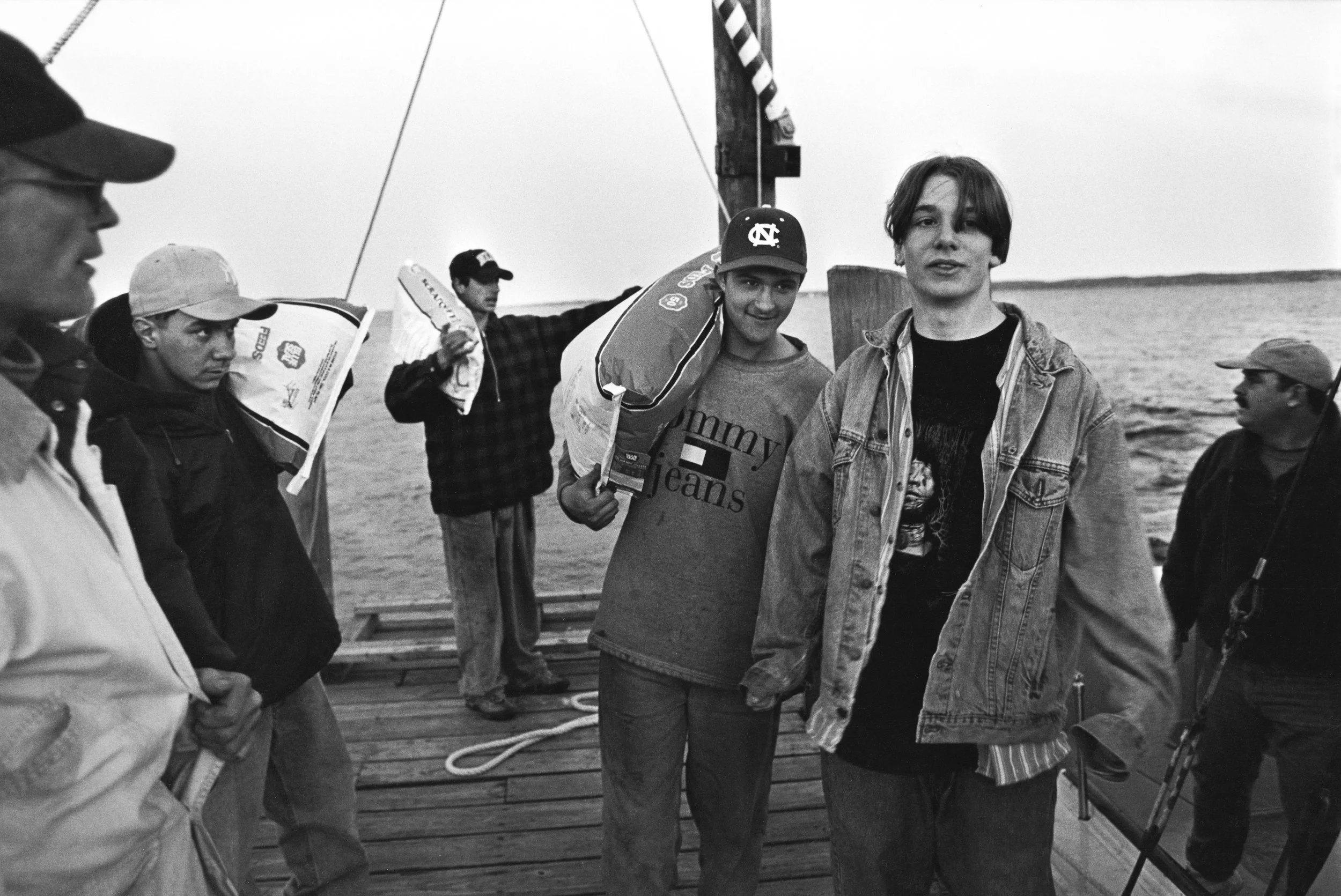
JIMMY COMES BACK TO PENIKESE AFTER RE-OFFENDING AND A STINT IN A PRISON FOR MINORS
After a week’s isolation, everyone was keen to see new faces but old-timer Jimmy’s return had been much anticipated. He sauntered down the jetty in the limelight of his apprehensive peers. Inside, Jimmy was relieved to have been given another chance
The weekly boat also brought fresh staff and the clinical director, and sometimes social workers, friends or relatives, and sometimes a graduate. And numerous general provisions. As the laden trailer jolted back up the track to the house, the week’s staff relayed events to their colleagues taking over. Few weeks were free of drama
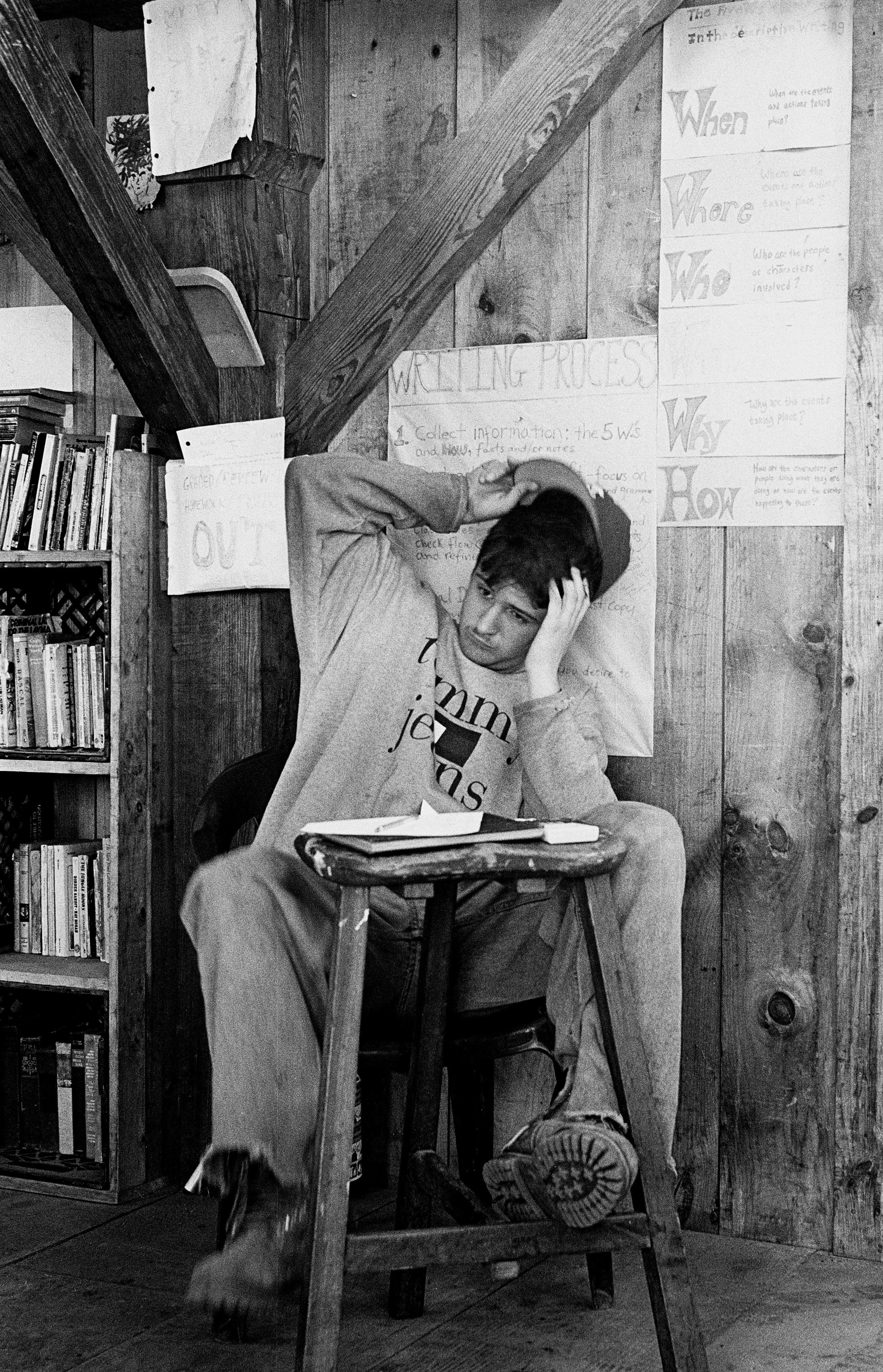
THE CLASSROOM HAD BEEN ‘A PLACE OF SHAME’
Many of the boys were virtually illiterate—some early students hadn’t known the days of the week. For Robb, the boys were ‘paranoid about school, and passing a non crisis-filled morning in the schoolhouse was a huge victory’
Sometimes Robb felt it ‘worthless to attempt even basic Maths’ as the boys were so behind. Sometimes he just read to them from the classics, such as The Iliad, to gauge their responses, trying to draw out how they might think or feel in certain situations
Another teacher straying from purely academic study designed a class around heraldry. Having described what coats of arms were, he asked the boys to draw a coat of arms they might have for themselves, interested to see what they would incorporate. Close to the bone, it seemed, but eventually the boys enjoyed revealing their aspirations. It was an upbeat class, with some like any keen schoolchildren
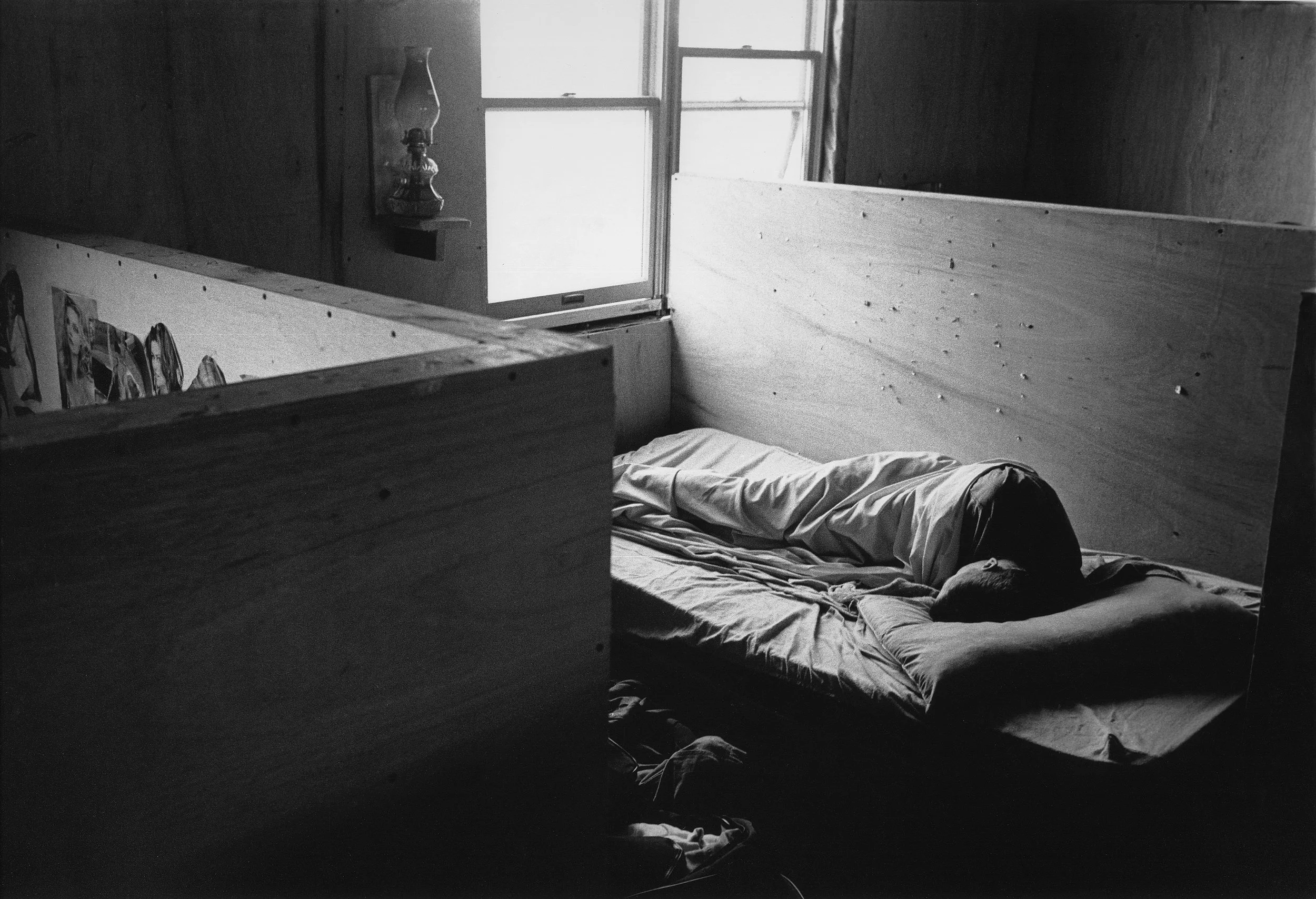
CARTER’S FIRST MORNING ON PENIKESE, HIS SPACE WAS YET TO BE PERSONALISED
Penikese was rarely a boy’s first placement in custody but it could have been a final chance to reform in such a caring environment. Their next sentence would usually be time in an adult prison
Jimmy had been lucky to be allowed back to complete the course. Trying to reform extreme delinquents alongside their peers inevitably produced tensions that the school wanted to eliminate
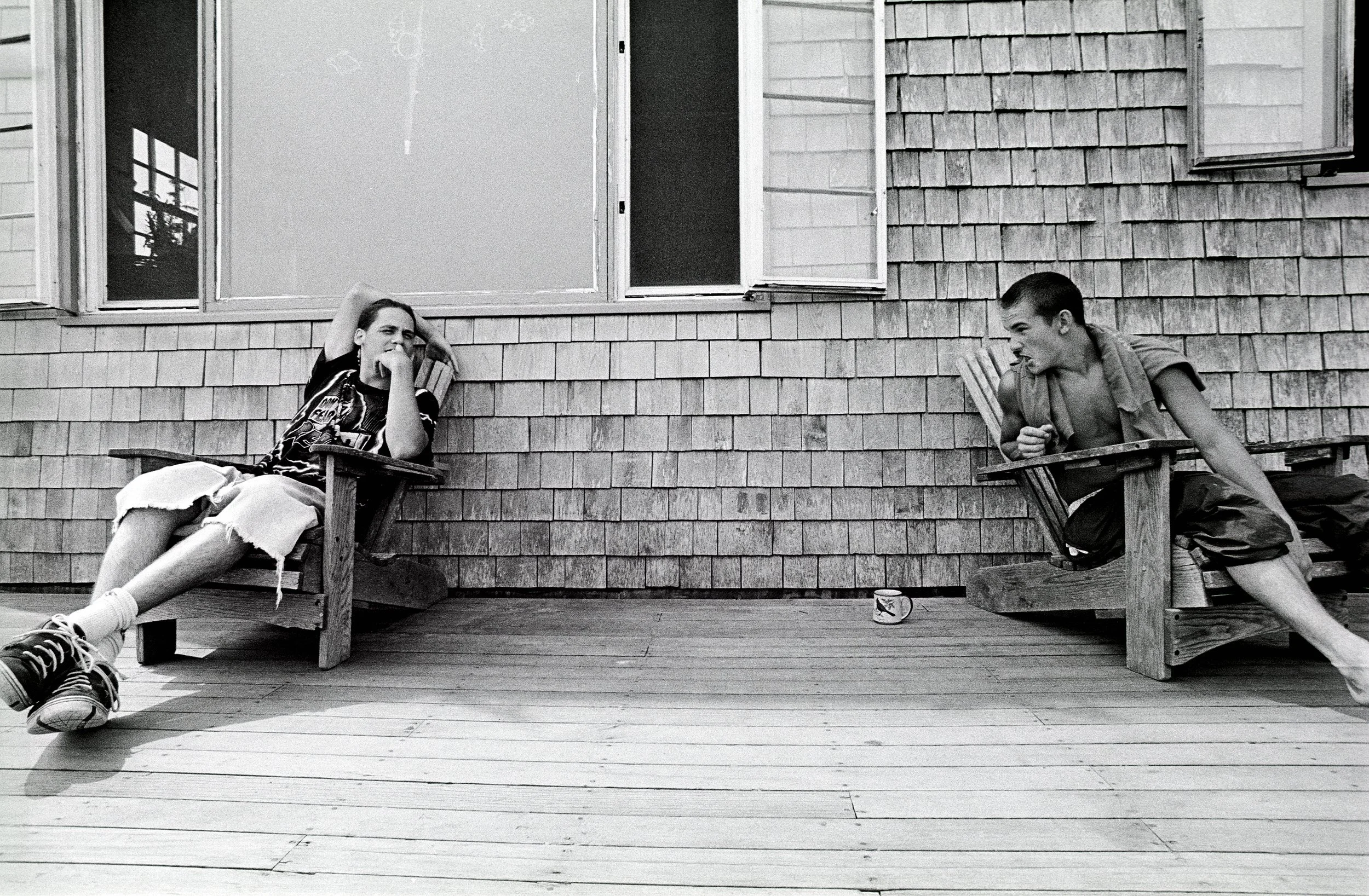
BONDING
As different boys came and went, moods and relationships changed. Dylan, just fourteen, befriends Brian, telling him his ‘war stories’
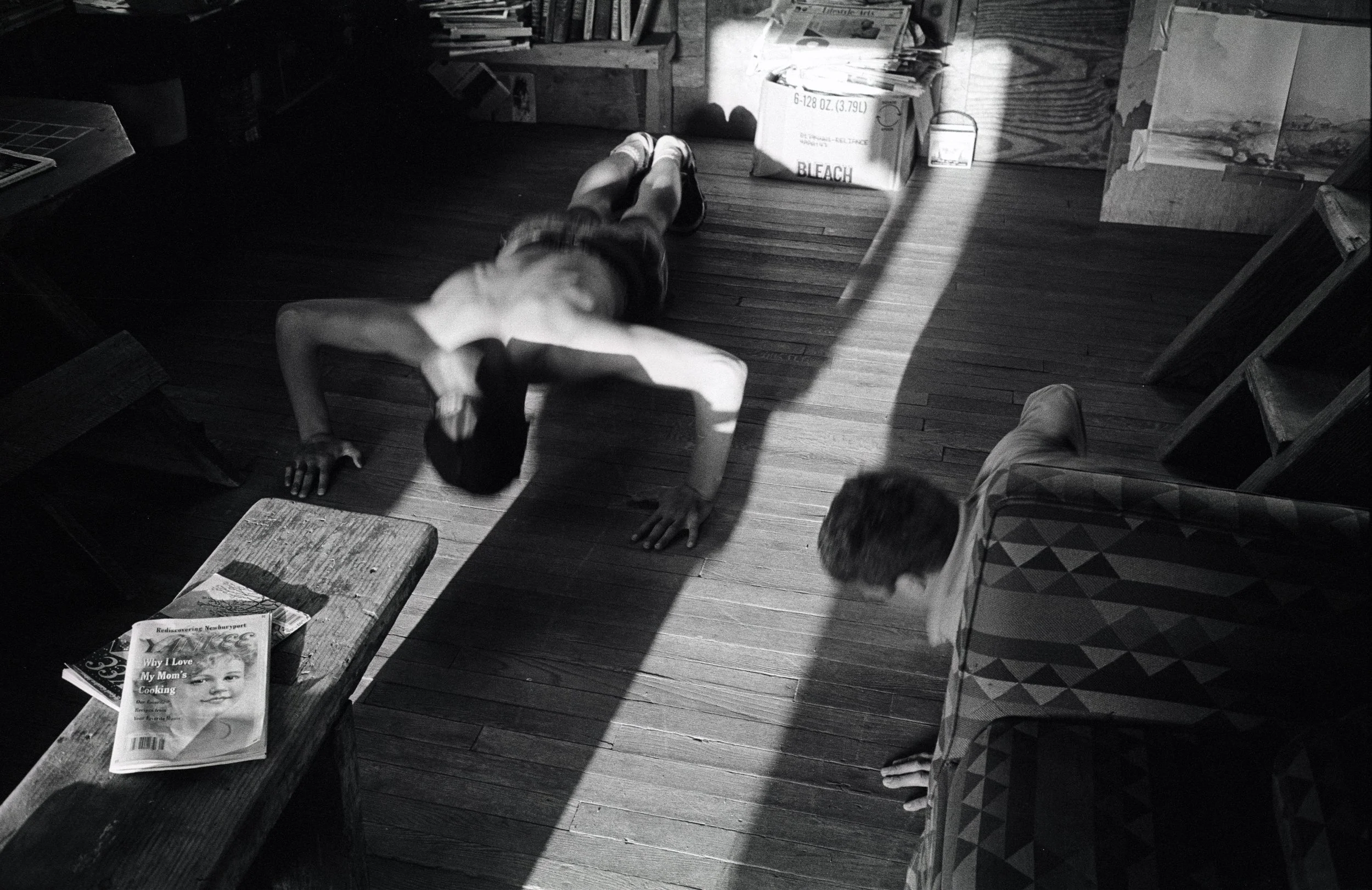
AFTER A MINOR SPAT
Dylan and Penikese Director, Toby Lineaweaver, face-off with a hundred press-ups
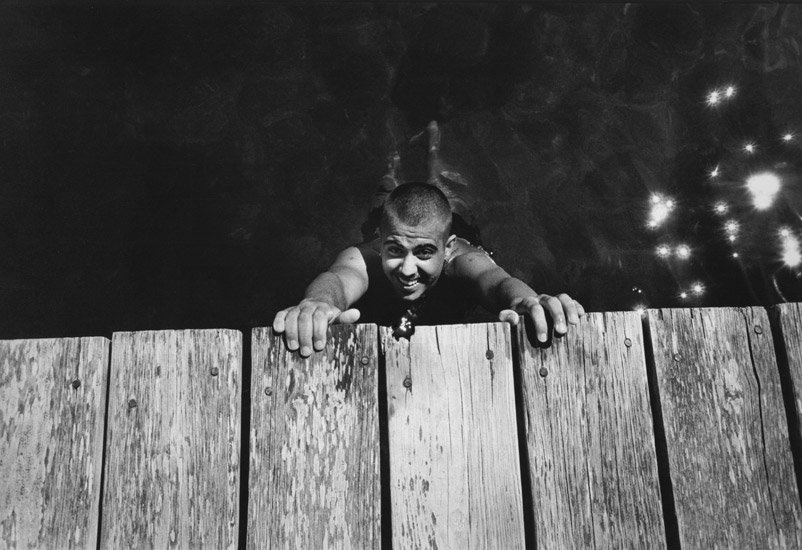
ENTHRALLED BY A DIP IN THE SEA, SCOTT LOOKS LIKE A KID ON HOLIDAY
In reality, both his parents were in prison. ‘Penikese could give boys their childhood back, as Cadwalader had hoped’, Wates wrote later
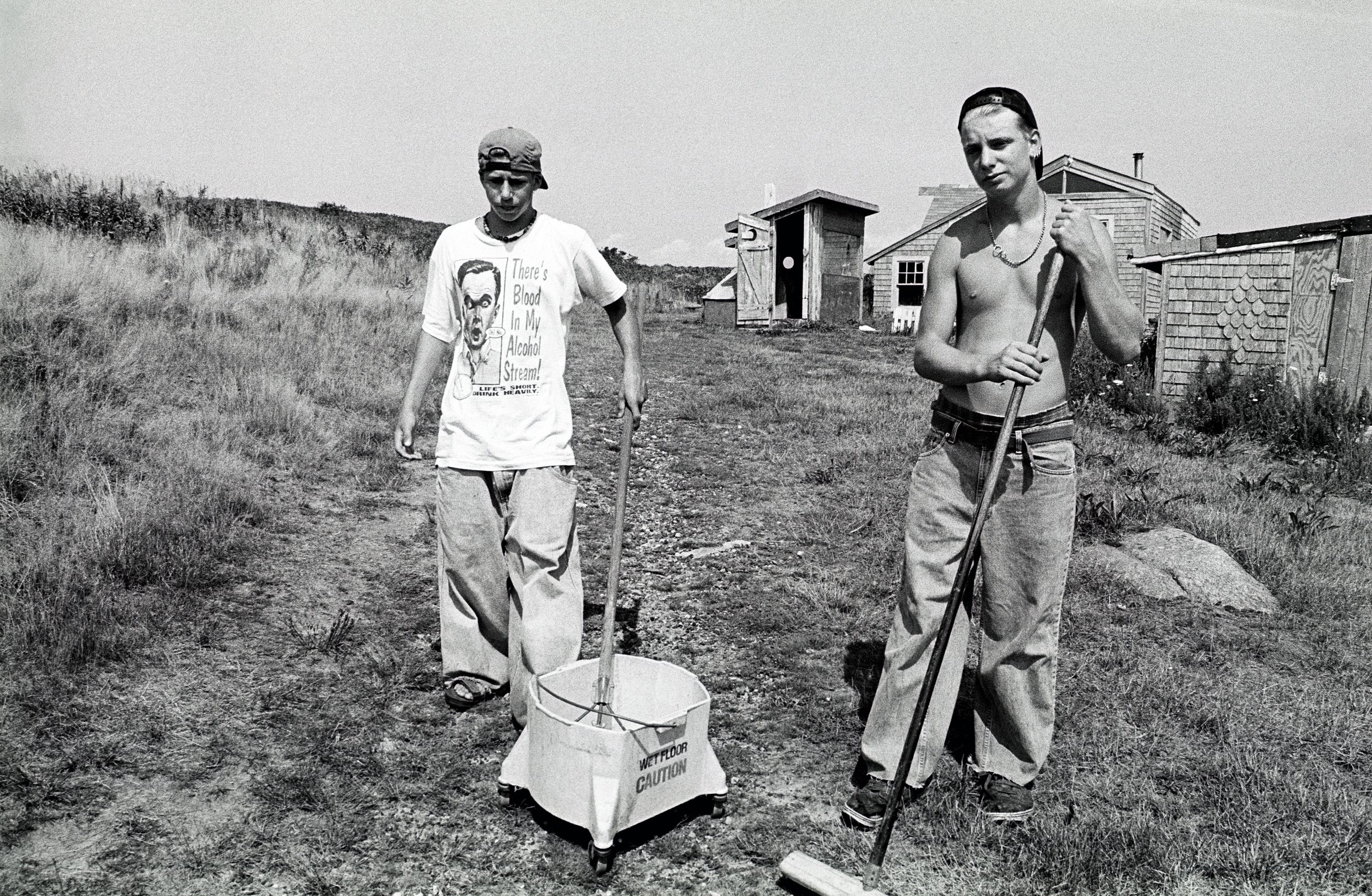
JOE AND PETE HAD JUST FINISHED THE WORST CHORE—CLEANING THE PRIVY, BEHIND
Group survival in harmony was sometimes grim
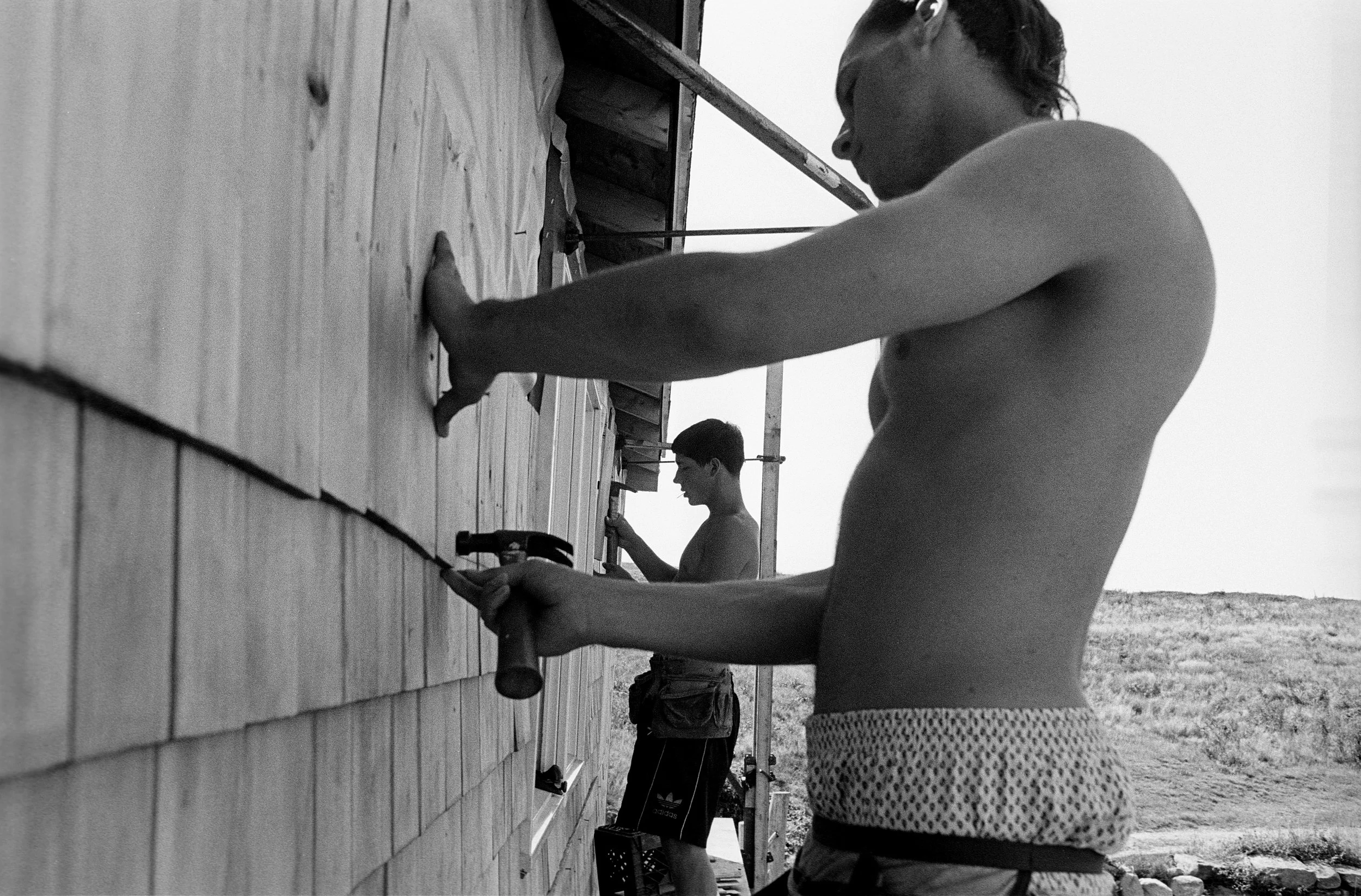
BRIAN AND TOM CLAD THE MAIN HOUSE’S NEW EXTENSION
They learnt skills that could help them when they left the island
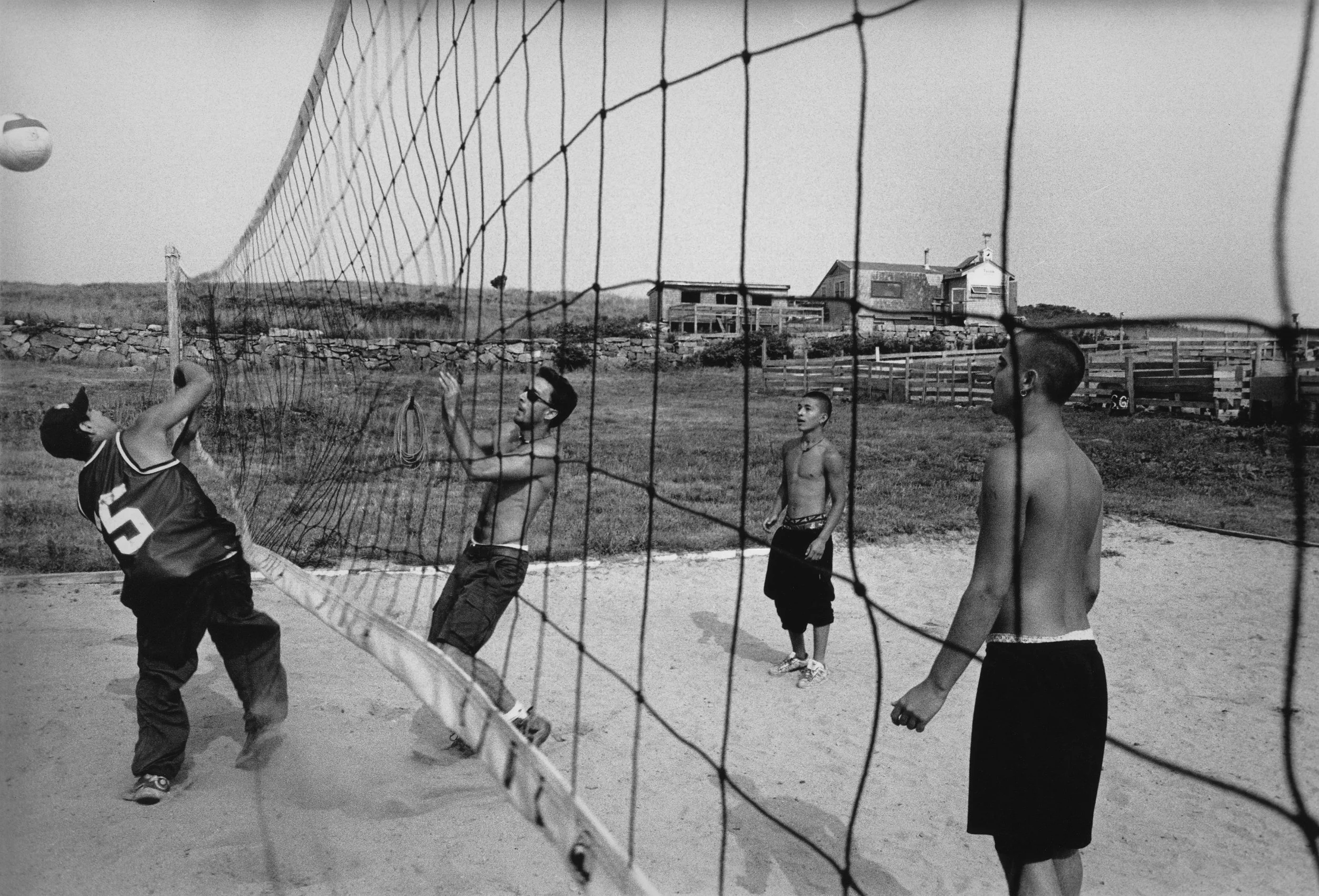
MORNING BASKETBALL
Positive adrenalin for the day. The animal pens and the main building are in the background. Regulated sport was also novel for the boys
JON, LEFT, KICKS-OFF WITH STAFFER MIKE WHO IS REDUCING JON’S POINTS FOR THE DAY
Jon was hyperactive but Mike had had enough. Two days earlier, Jon had learnt that his foster parents had forgotten about his home leave weekend and gone away. His time ‘at home’ might have to be cancelled. The day before, his stress levels rising, he had angrily torn his trousers in two. The staff were trying to help but Jon continued to complain
The other boys hoped he wouldn’t lose it again. Their presence probably had a calming effect. Jon had to learn how to deal with disappointment and being let down
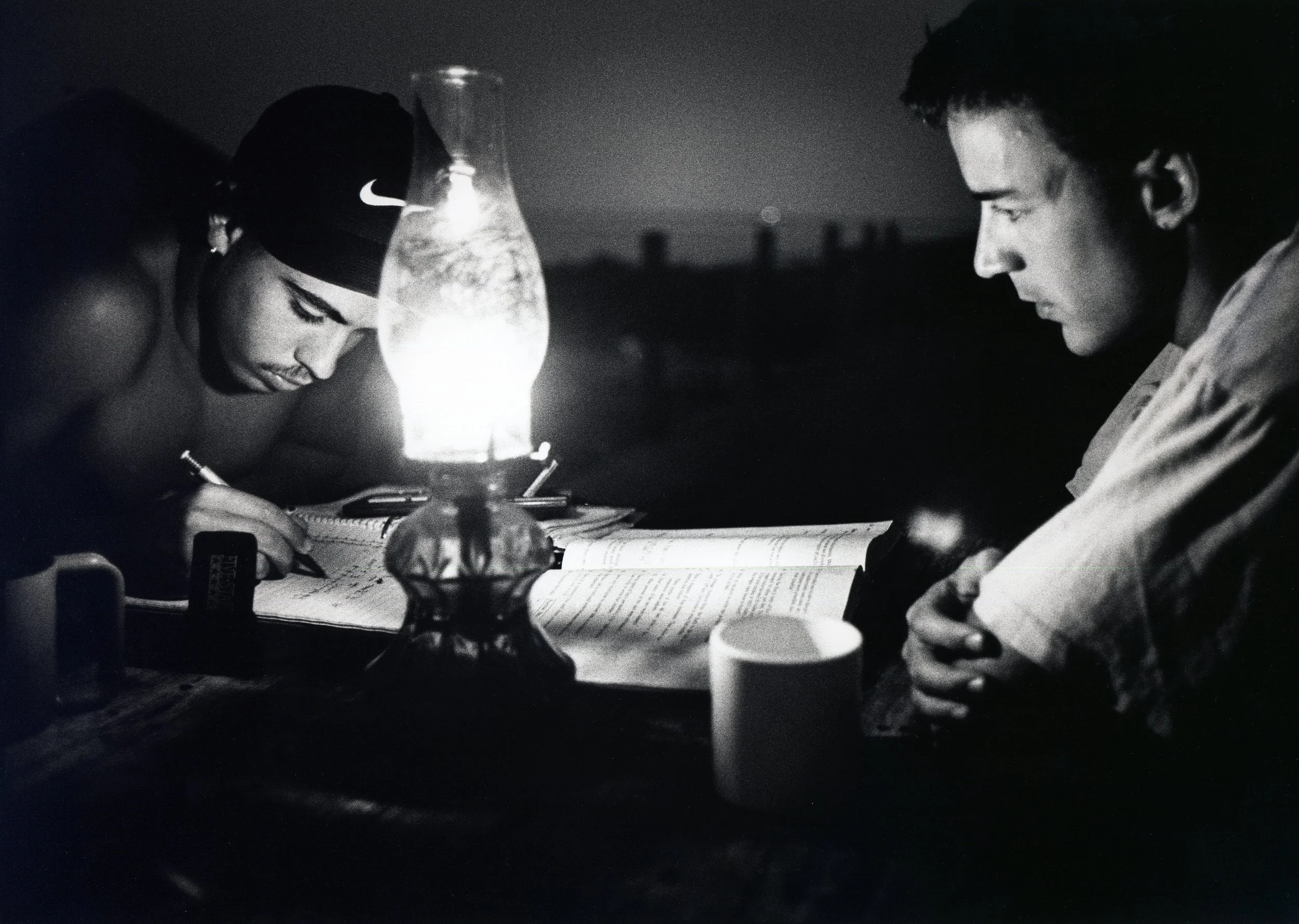
A SUMMER NIGHT ON THE TERRACE
Teacher Shawn offers Scott help with his Maths homework. Staff were essentially on duty twenty-four hours a day
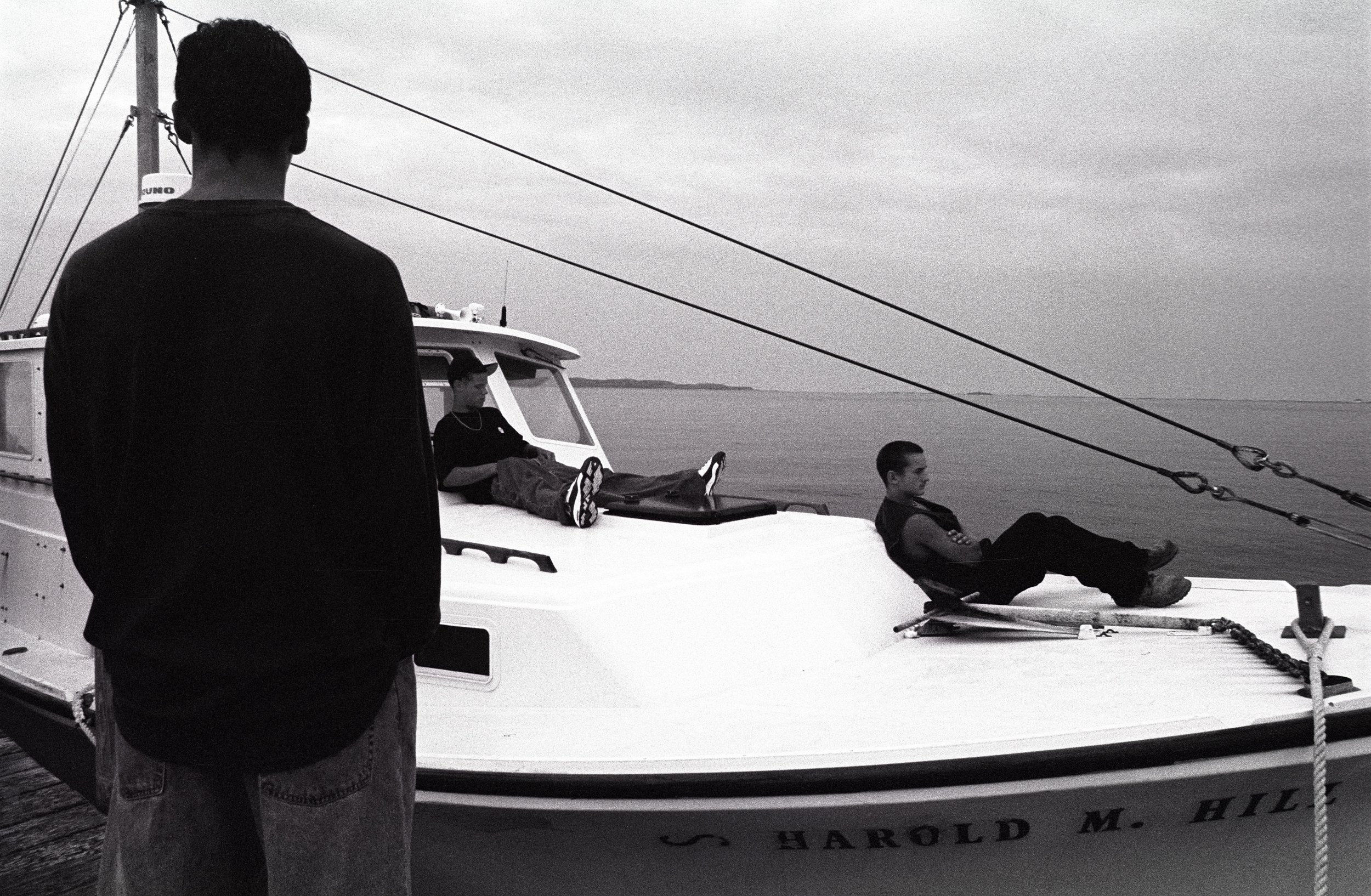
JON GOT HIS WEEKEND LEAVE
Dylan was also going away for the weekend. Tom gloomily watched the boat depart , not yet eligible for home leave
When on-island, all that the boys wanted was to be off-island. In reality, they were nervous about going home. Their pasts would stalk them and illicit possibilities tempt them. When they went back to Penikese they would be searched, and give a urine sample to check they had not been taking drugs—a rule which had probably helped them adjust to what would be a different sort of home life
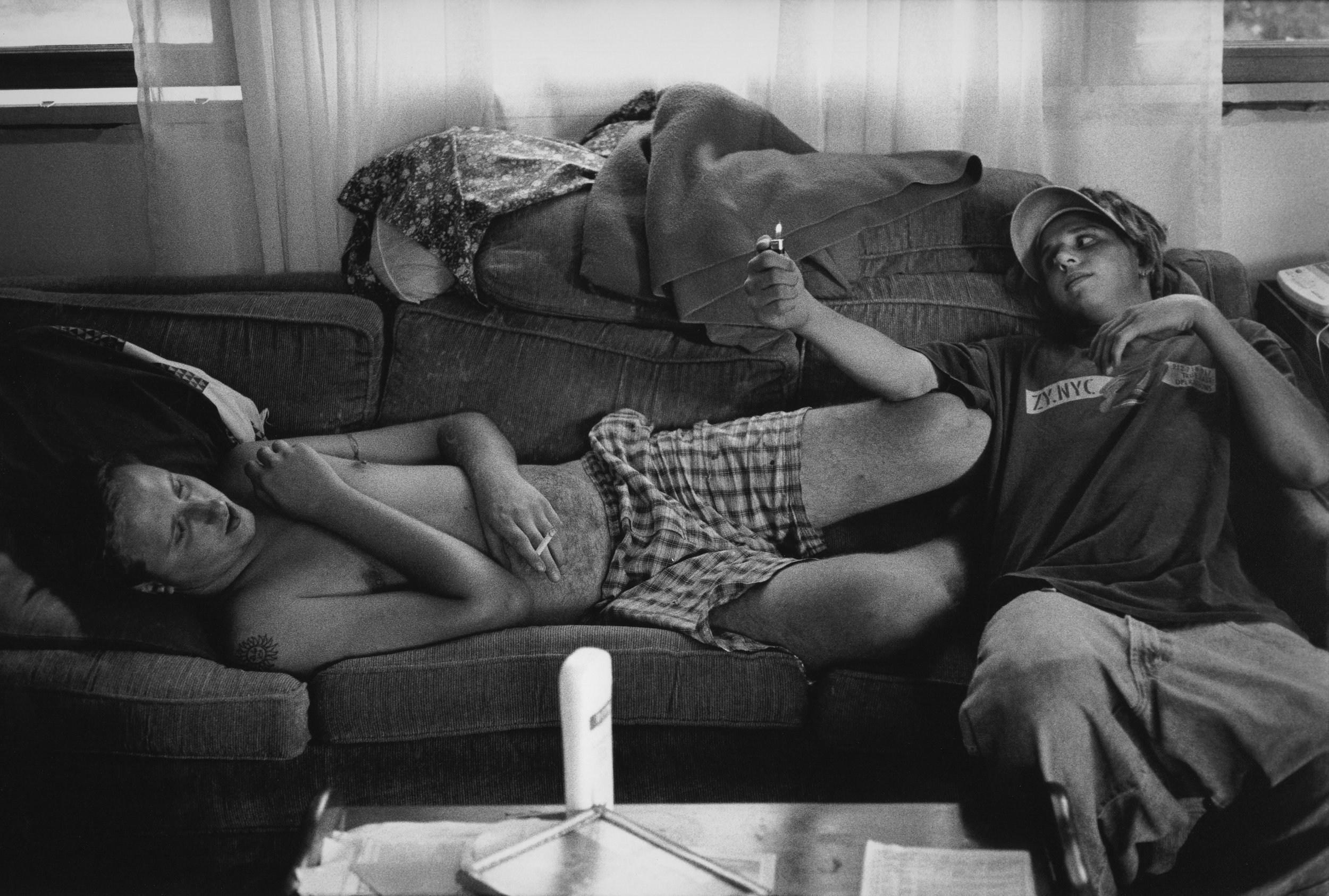
JOE BACK AT HOME WITH HIS BROTHER
Joe was lucky to have a supportive and grounded mother and brother, and had what many of the boys thought was a privileged background. By the time Joe graduated, he had cost Penikese $100,000; the state’s tax payers had covered $80,000. He had found work from the sympathetic manager of a building company, using skills learnt at Penikese, and he had turned away from friends involved in crime. He was frustrated to be earning less money than when he’d cruised the streets stealing but, free at least of shame, he was beginning to appreciate the benefits of going straight
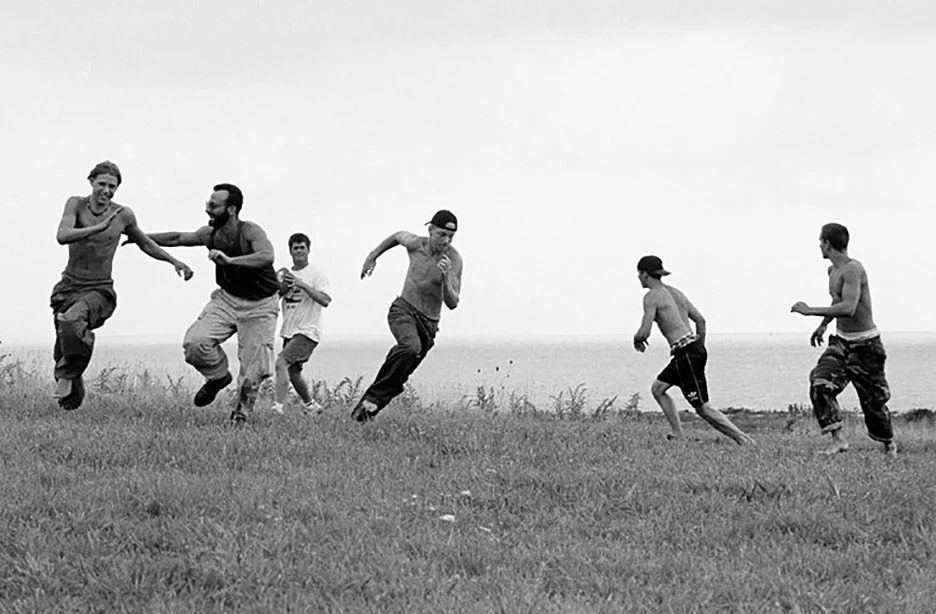
‘A STOP-ACTION TABLEAU FOR THE PENIKESE AGES’ (LINEAWEAVER)
Director Toby Lineaweaver, centre, put this picture in a letter to benefactors, below, describing one boy’s journey towards completing the course. Some parts are omitted
The quarterback is ready to pass…then, in the middle, is the one the quarterback has his eyes on: Jimmy…leaning hard into a turn, head down, face and stomach knotted, the very picture of concentration and determination. Wait a minute, Jimmy? Jimmy, the career slacker, underachiever, and goof-up, actually trying…extraordinary since few students exceeded him in his unfailing capacity for misfortune, underachievement, and self-destruction.
In most ways, Jimmy was Penikese-typical: multiple arrests, placements, and run-aways, substance abuse, reckless behaviour, you name it. A real nice kid, folks would say, but… On the island, Jimmy was happy so long as he was fishing, but made everything else an exhausting power struggle.
Yet Jimmy was irresistibly likeable, and people rooted endlessly for him. Nevertheless, the misdeeds mounted, and one day Jimmy was taken from the island to court to face the judge. On the way he tried to run. He was later taken to detention on the grounds of a former state mental hospital.
Staff agonized about Jimmy’s fate, finally deciding against readmission, feeling he would never change until he faced the ultimate consequence: jail. So Pam [the clinical director] and I drove to Taunton to personally deliver the news. A guard led us into a room with breezeblock walls and peeling yellow paint. Jimmy entered wearing an orange jumper, slippers, and a look of well-practised chagrin.
I told Jimmy he had run out of chances and could not come back. He nodded in acknowledgement, eyes down and watering, and then had a sudden outburst. The guard hurried him from the room.
Three months later, Jimmy amazingly had a chance of returning to Penikese. The island staff were given the final call. He was allowed to return on stern conditions. A week later, Jimmy bounded up the stairs of the onshore house and threw his arms around me and Pam, singing a joyous and repentant song.
Yet Jimmy continued to struggle, now with the pain of growing. He paid another brief visit to detention, and in the weeks before graduation developed a near-fatal case of “short-timer’s disease”: emotional outbursts, defiance, and desperate talk. The closer he got to the goal line, the worse it became, and we all wondered if Jimmy would ever make it.
At last, his final day arrived. That evening at the dinner table in kerosene lamplight, Jimmy, Mike, Shawn and myself shared an intimate good-bye. Later, tossing with sleeplessness, I had to get up and peer into Jimmy’s area, just to make sure he was alright. There he was, safe and soundly asleep. The next day, Jimmy graduated. Before departing the island for the last time, he left us with these words:
‘Even though it was hard for me to accept that people were trying to help me, I am glad I did, because it feels a lot better to say I completed Penikese instead of saying I failed it. Penikese was not an easy programme. During all the months I’ve been here I’ve learned a lot, but the most solid thing I learned was knowing that people stood by me, and that if I really want something I have to work for it’.