

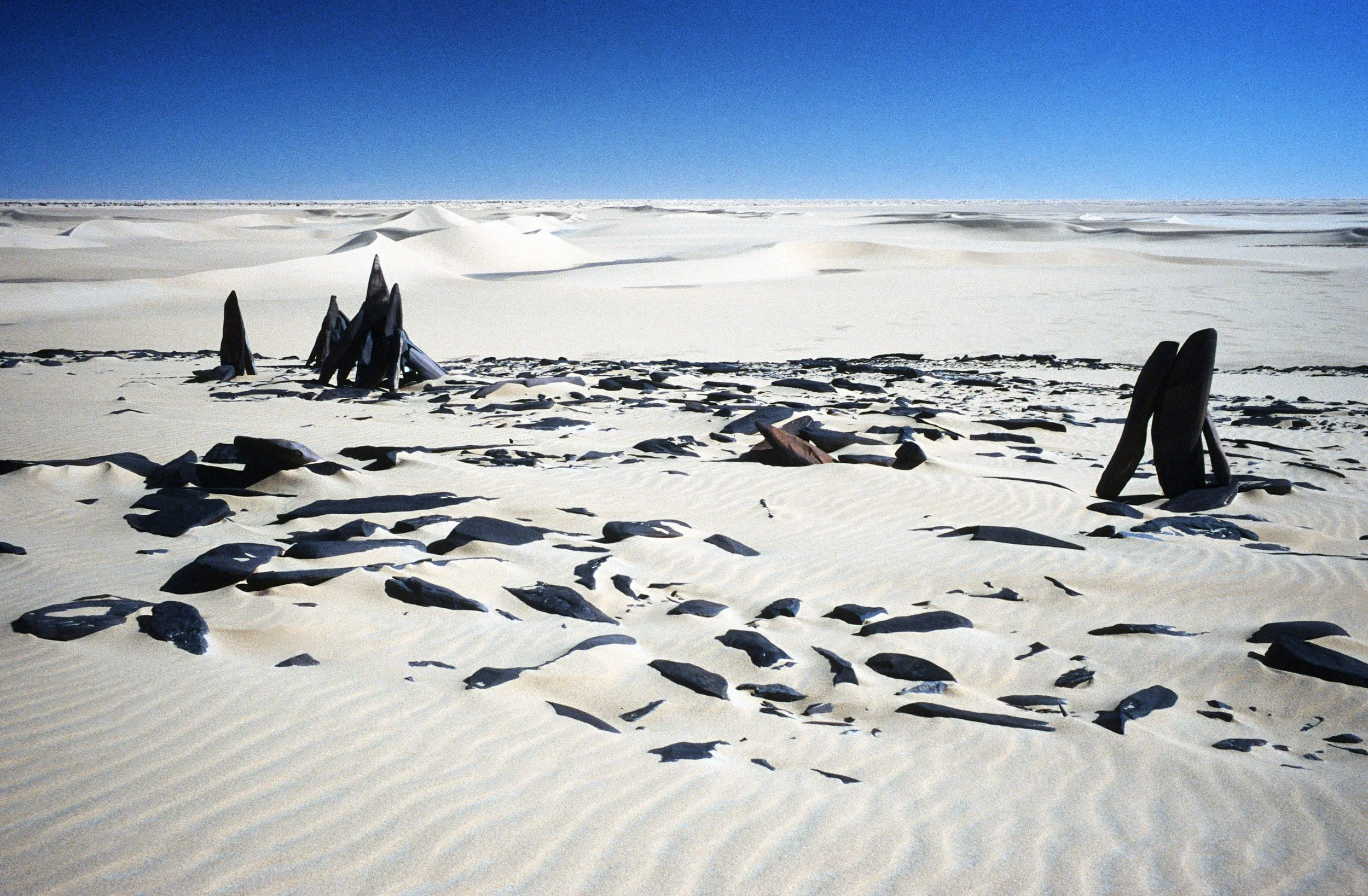
In this desert where everything is fierce, where life is tough, to complain is a weakness which dishonours men
Mano Dayak
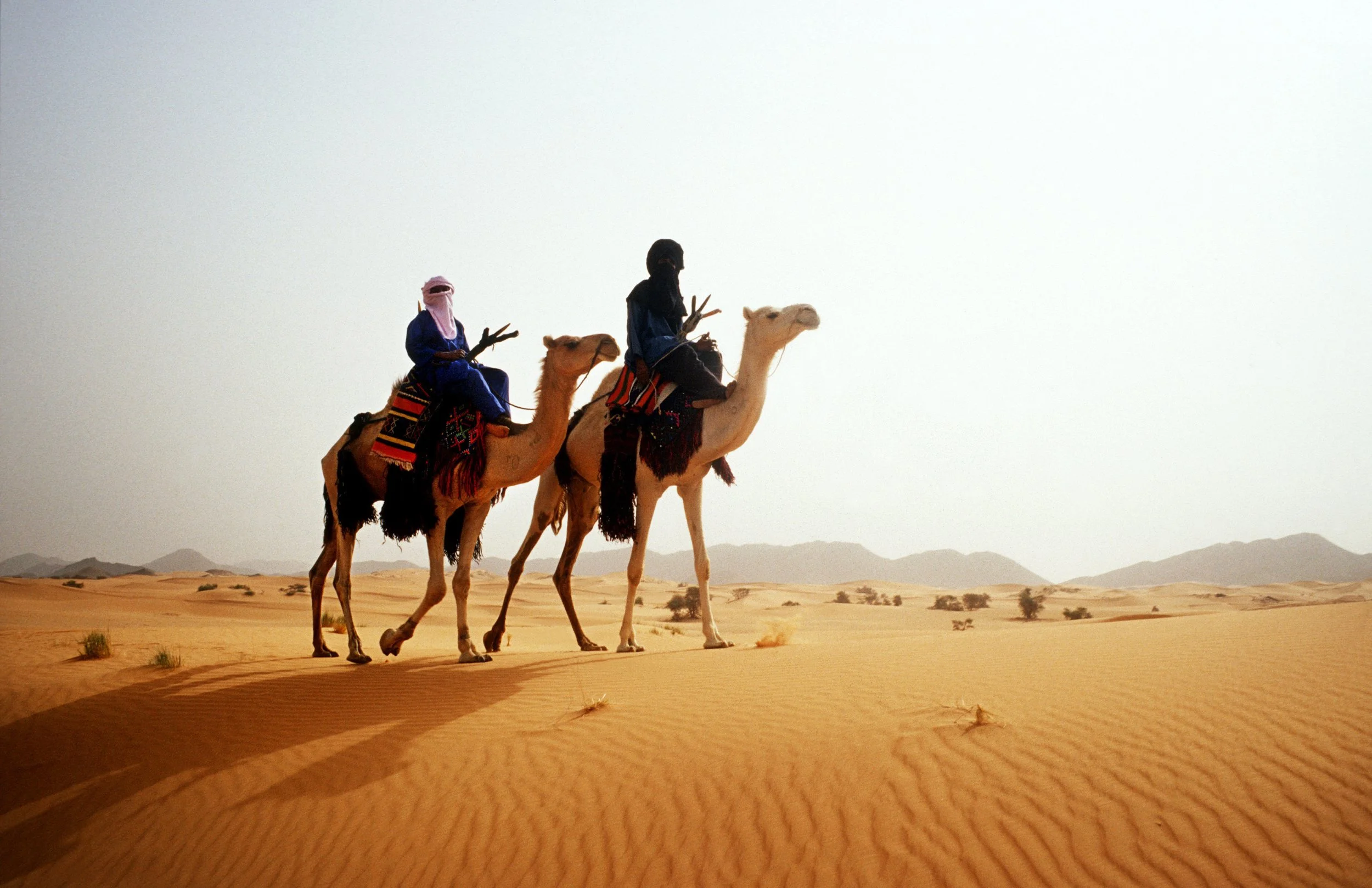
God created countries full of water for people to live in, and deserts for people to find their souls
Moussa Ag Amastane, Amenokhal of the Kel Ahaggar c.1900
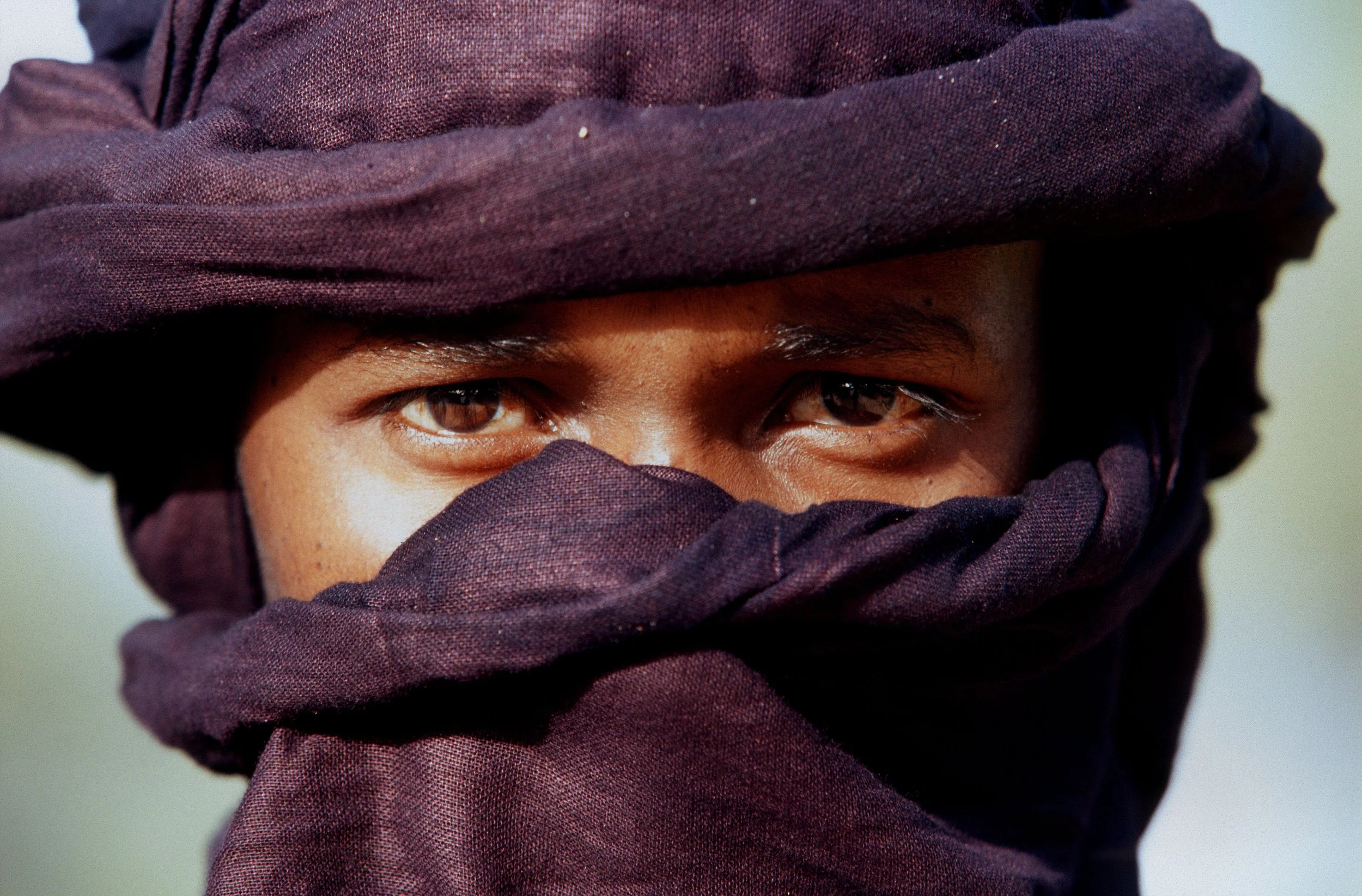
Unhappiness, seven times unhappiness
To the man who shows his mouth
His mouth which is an impure well inhabited
By the devil of language
His mouth which is the sacred home
Of the angel of words
The law of the dark veil is for me
Clearer than light
The law which commands one to hide one's face
To anger, to pride, to suffering
To love and even to death
Recorded and translated by Père de Foucauld
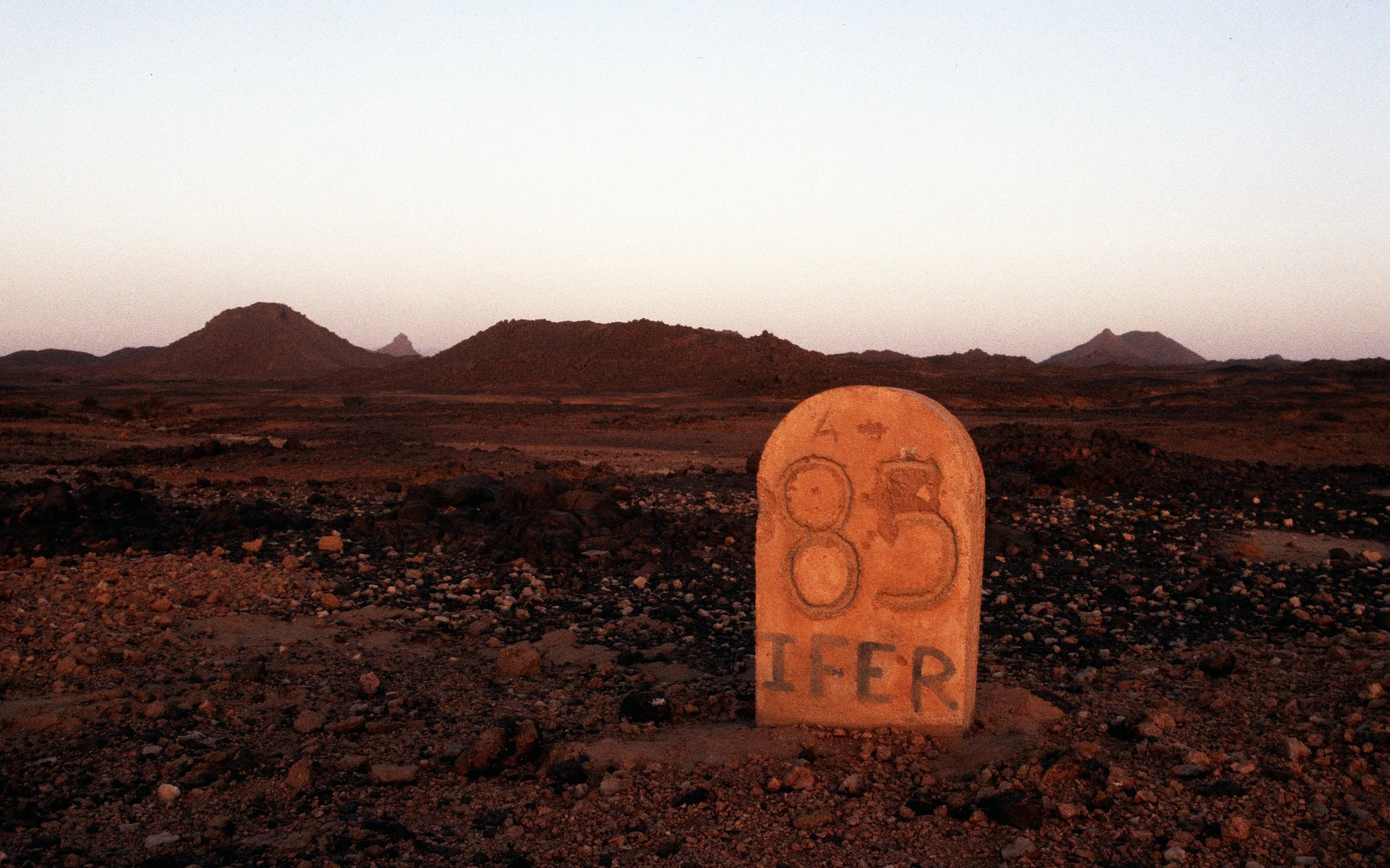
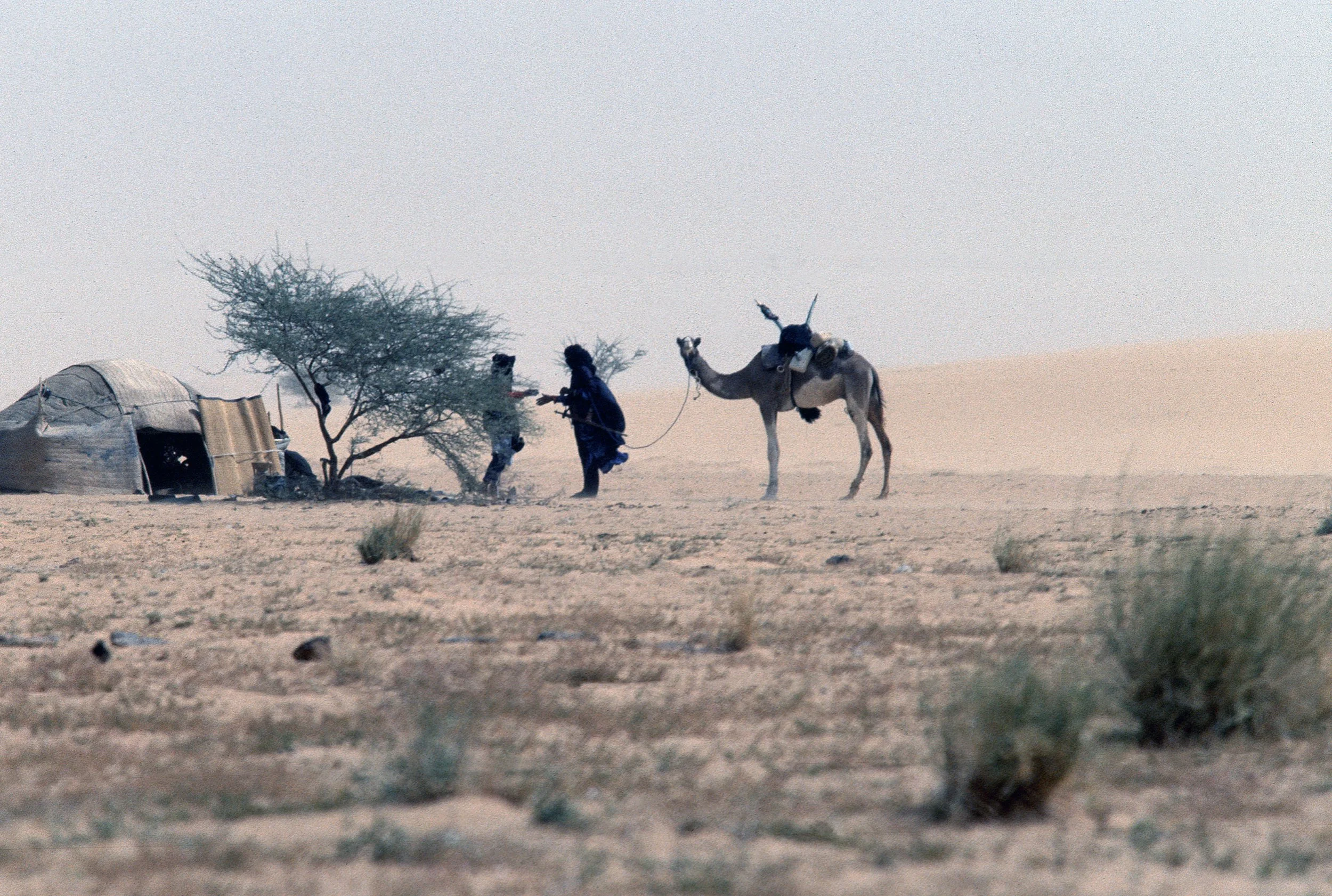
The stranger who arrives, enemy; the stranger who stays, King; the stranger who leaves, blacksmith
This semi-jokingly explains the Tuaregs’ noted hospitality. They must treat guests as kings, giving them the best of whatever food they have—even if this means killing a goat they’ve been saving for a special occasion, or which may be a child's pet. They watch the arrival of a stranger in the distance with a certain annoyance, knowing they must welcome the stranger properly. Once the stranger is with them they will treat him or her like royalty. When the stranger leaves he or she takes on the character of the blacksmith, who is respected but mistrusted at the same time. They fear the stranger’s judgement of them—he will take his opinion of them to other people
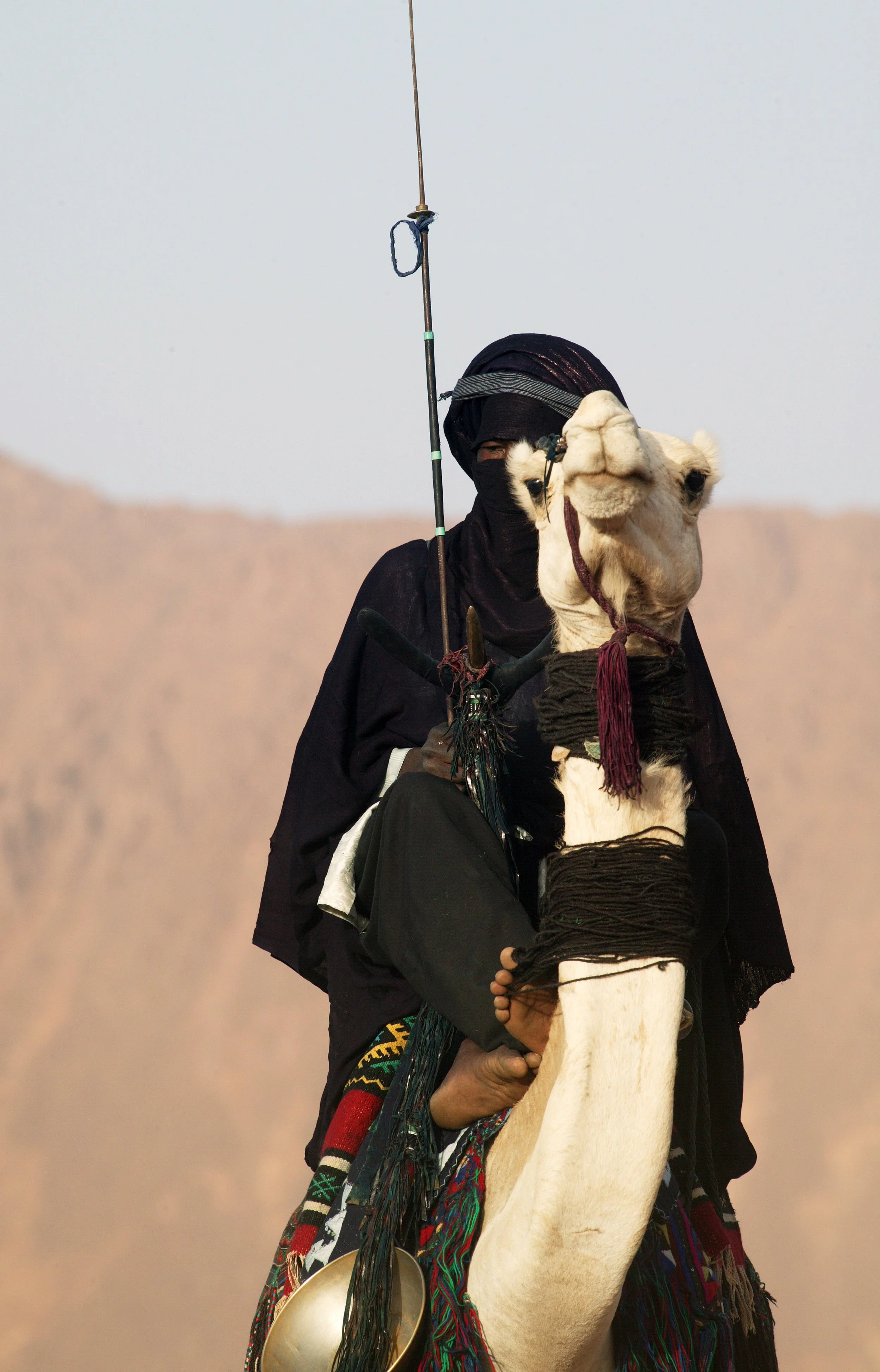
In fact, in Tuareg culture, it is as important to know how to handle words as it is to handle weapons
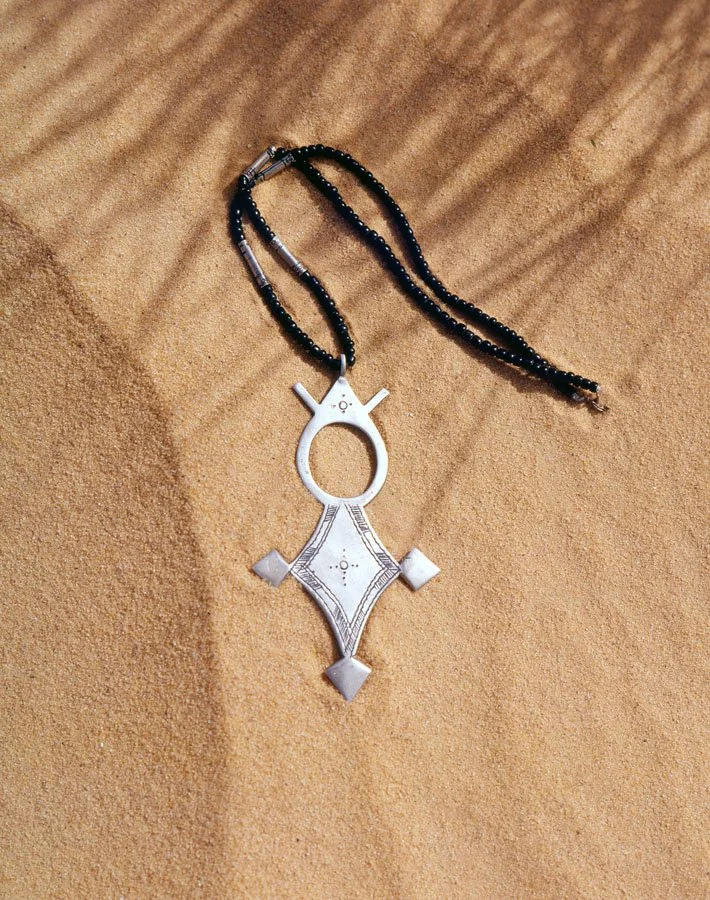
My son, I give you the four directions of the world because one doesn't know where one will die
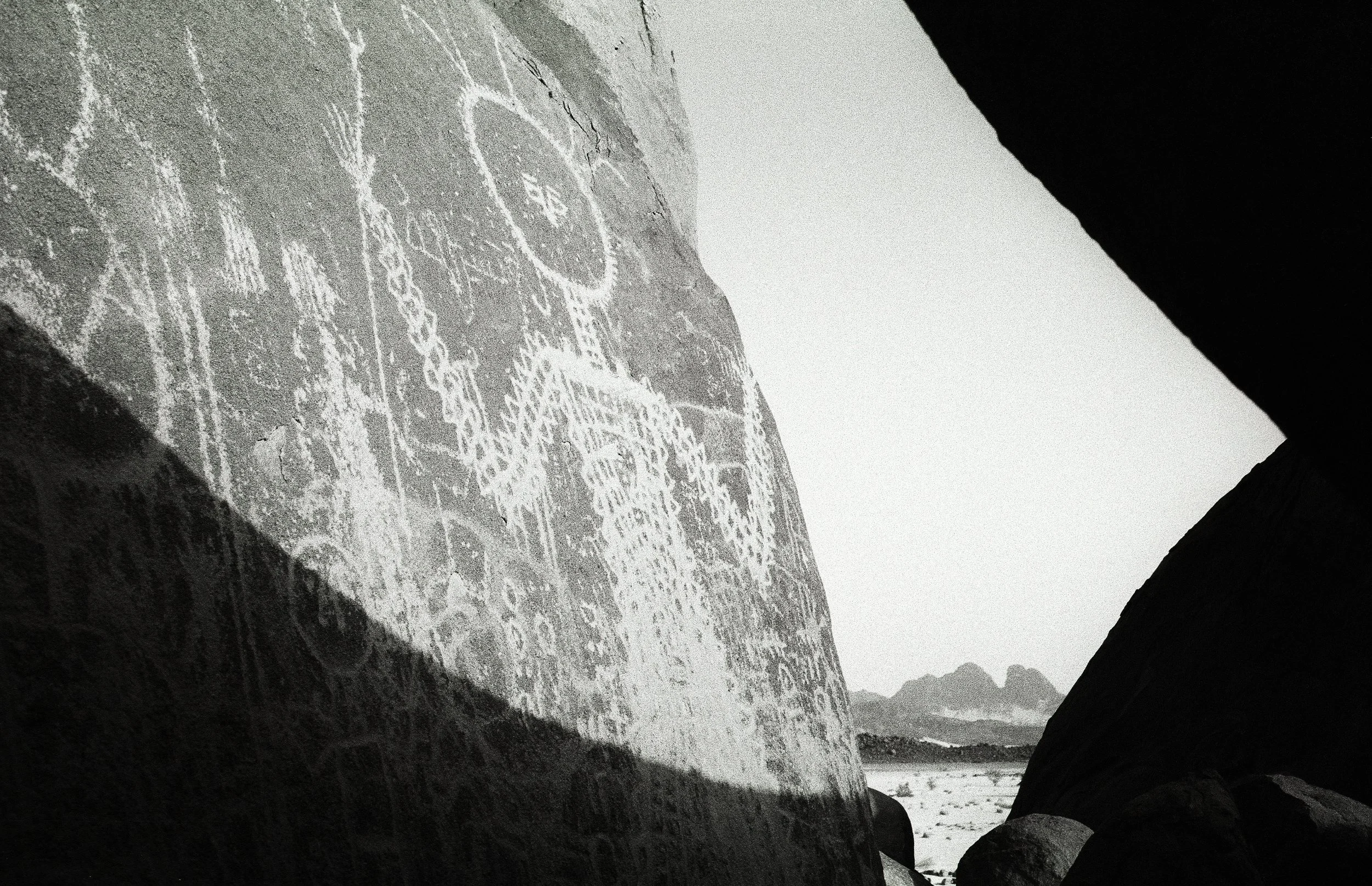
As Tuaregs say, the rock art that litters the Sahara was made by the ‘gens d’avant’. The person here was described by the French archaeologist, Henri Lhote, as coming from the so-called rock art school of the Libyan warrior
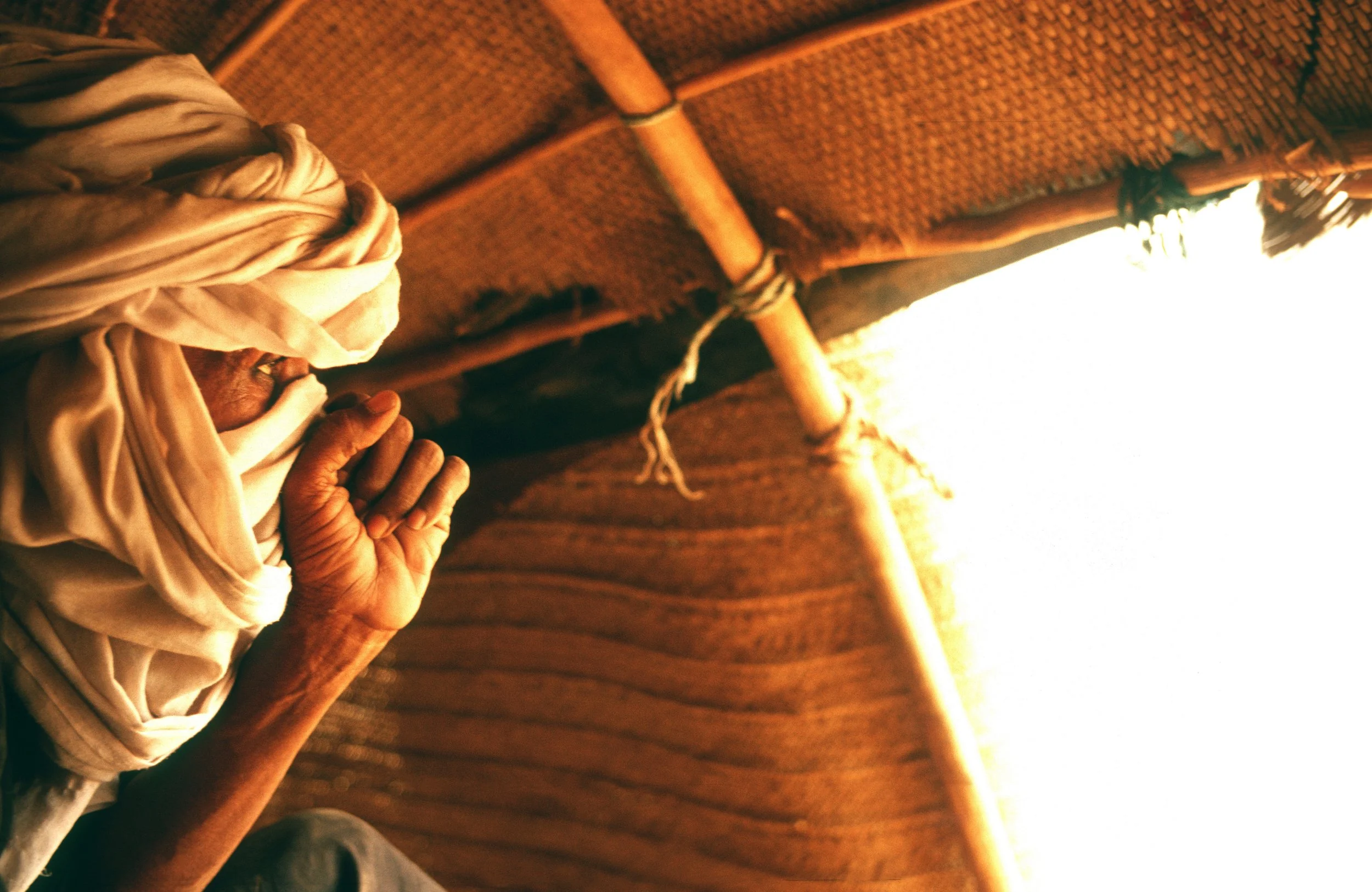
If you decide to go into the desert
Learn first humility
For there where you place your feet
No noise will be made
Know that in the immense silence
You will hear only the beats of your heart
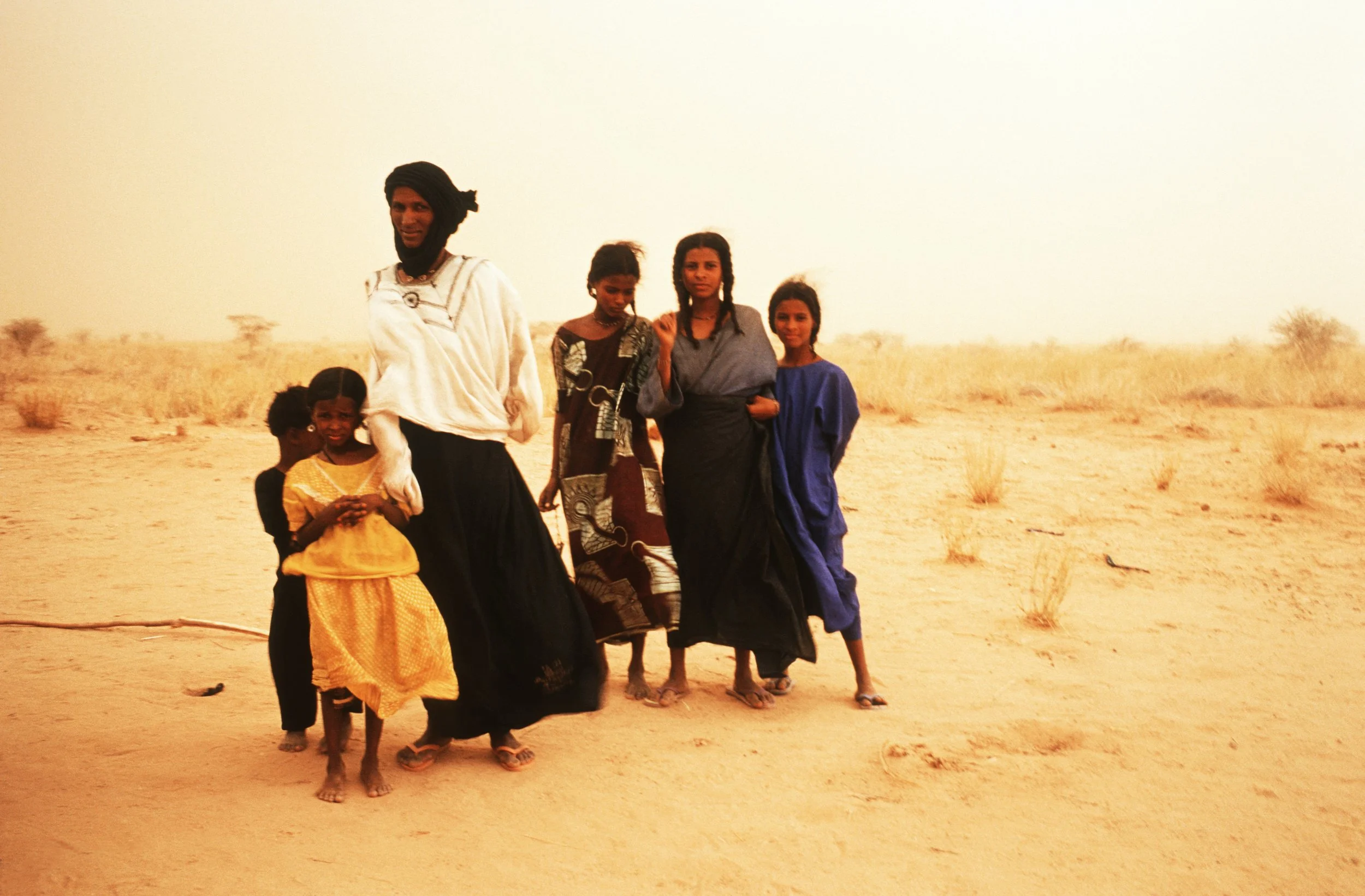
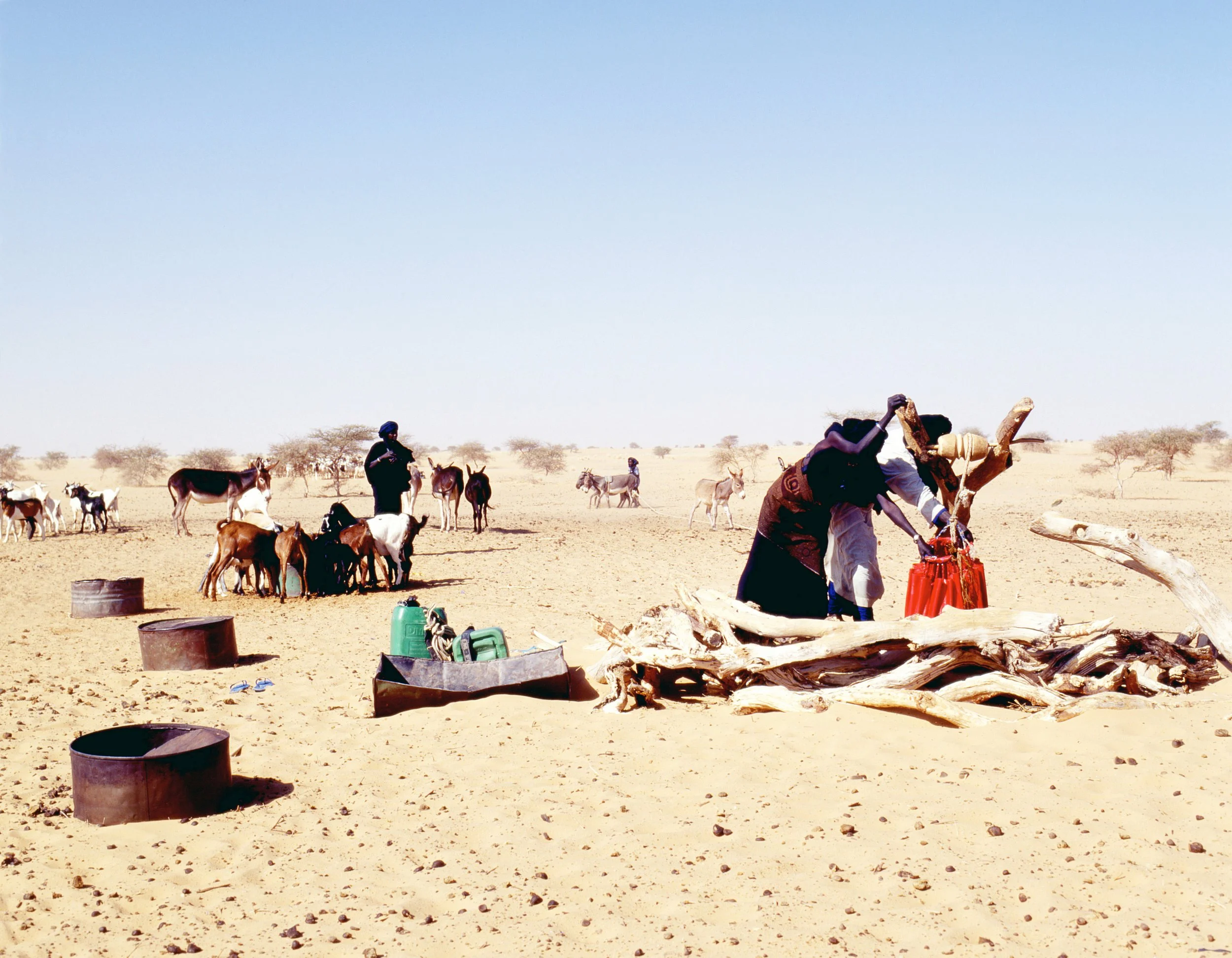
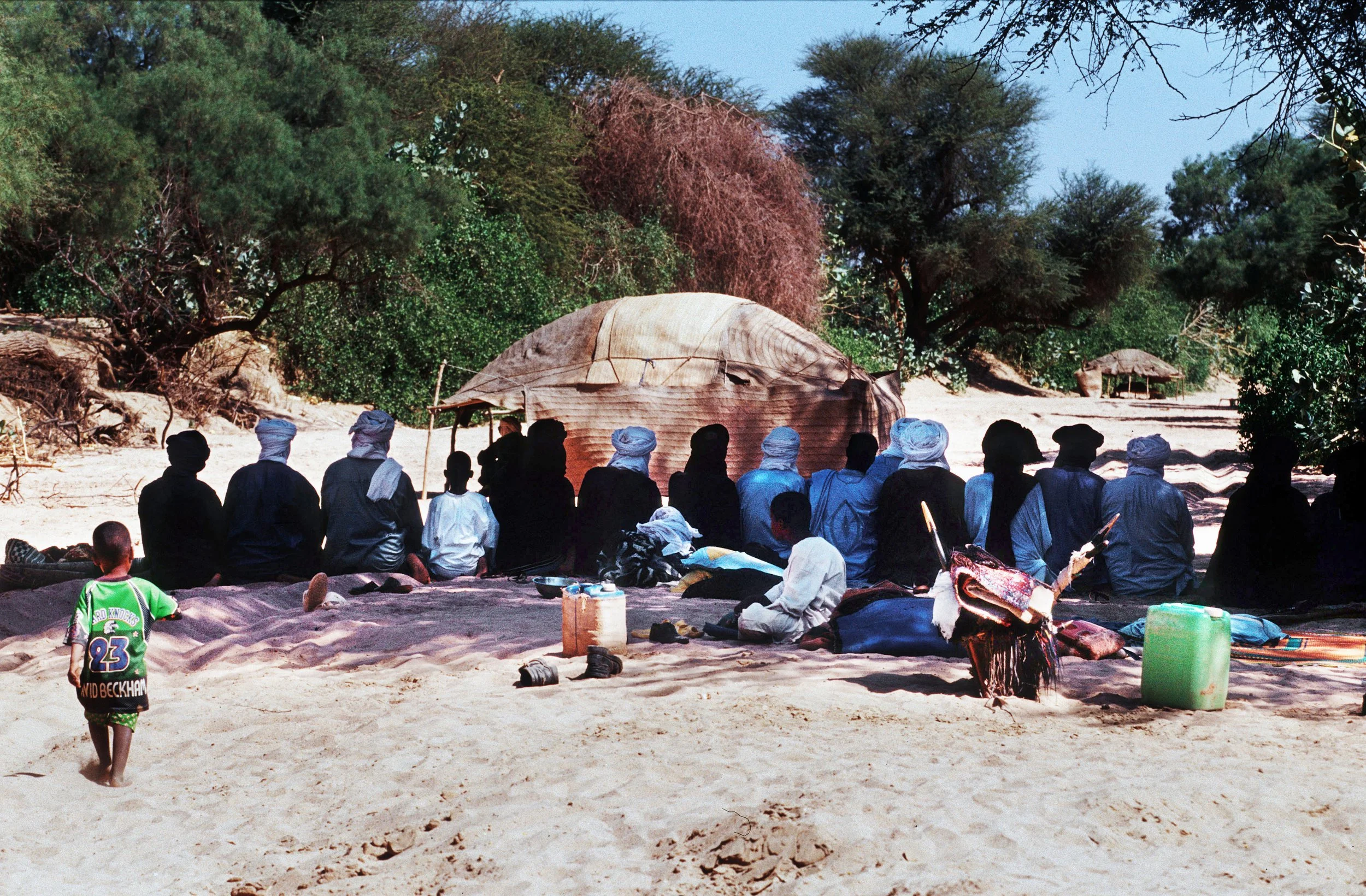
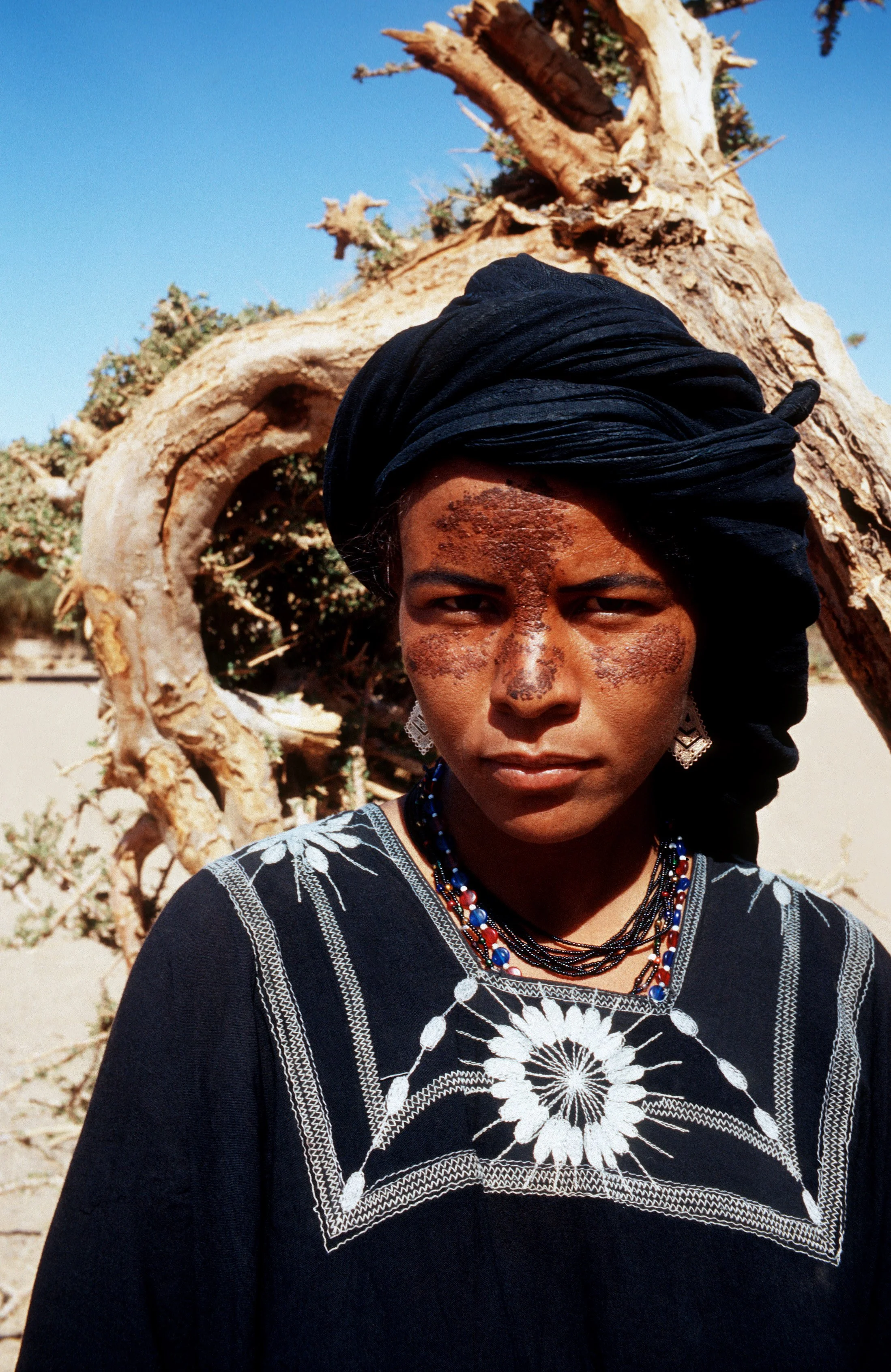
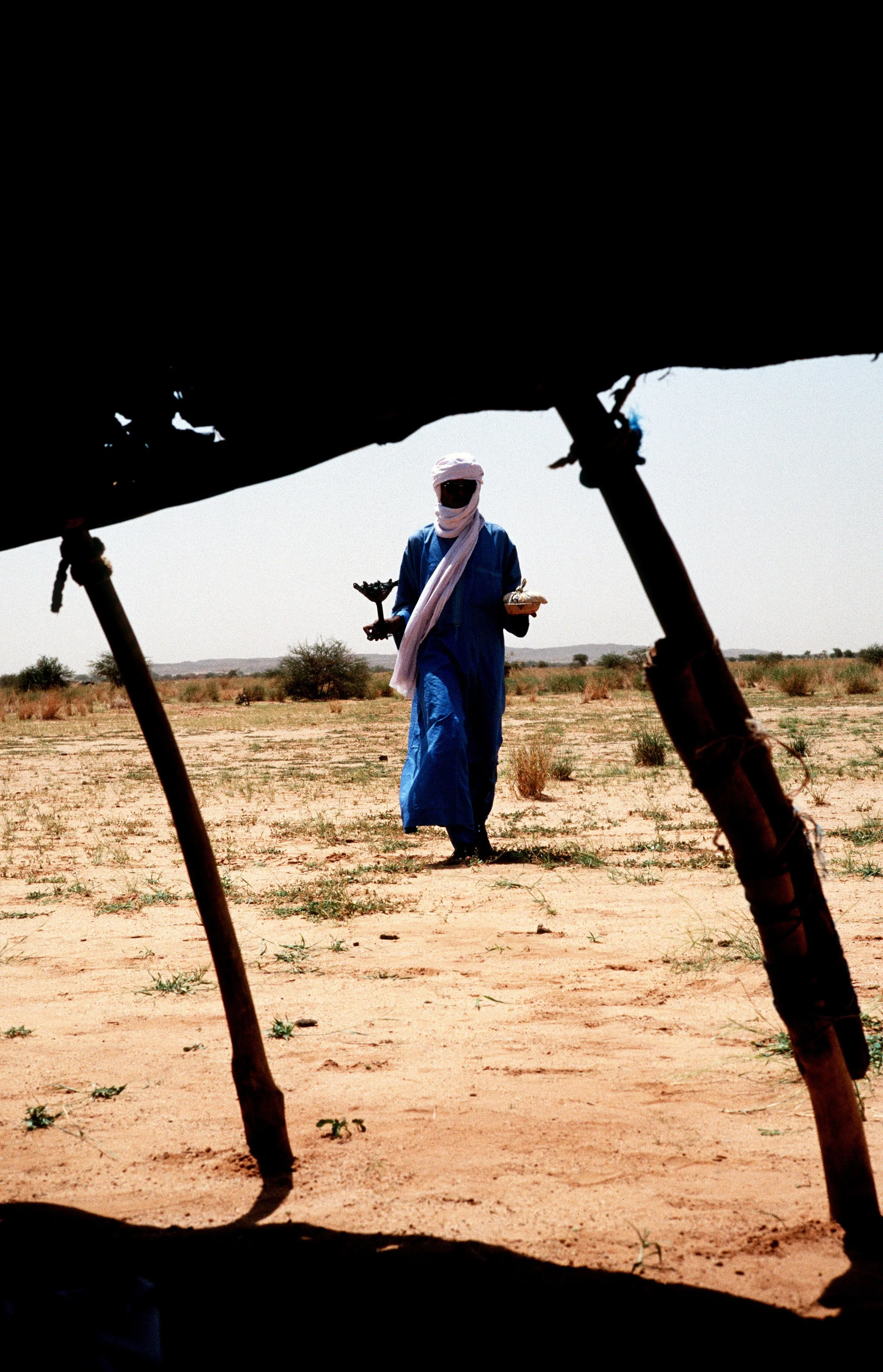
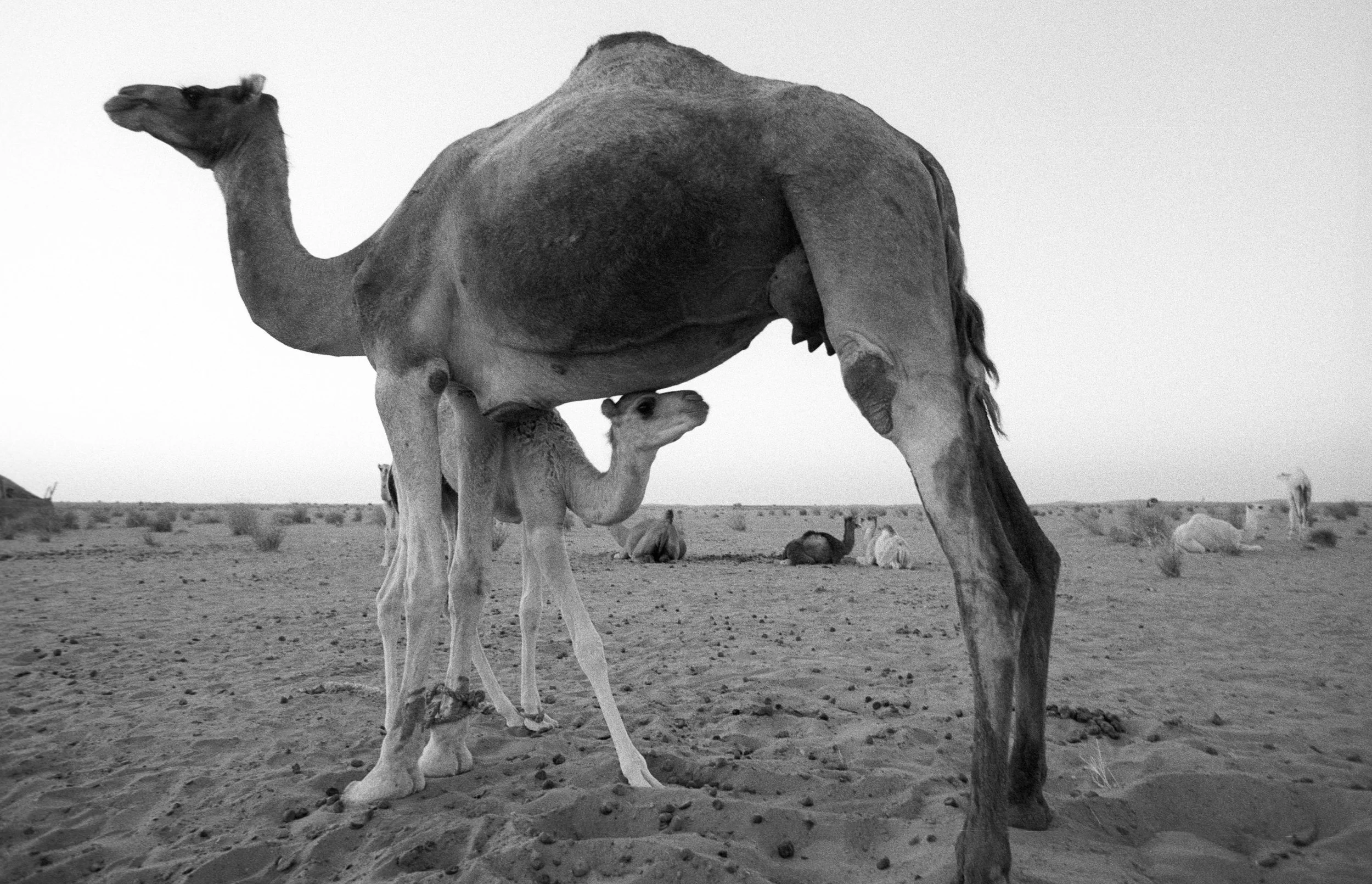
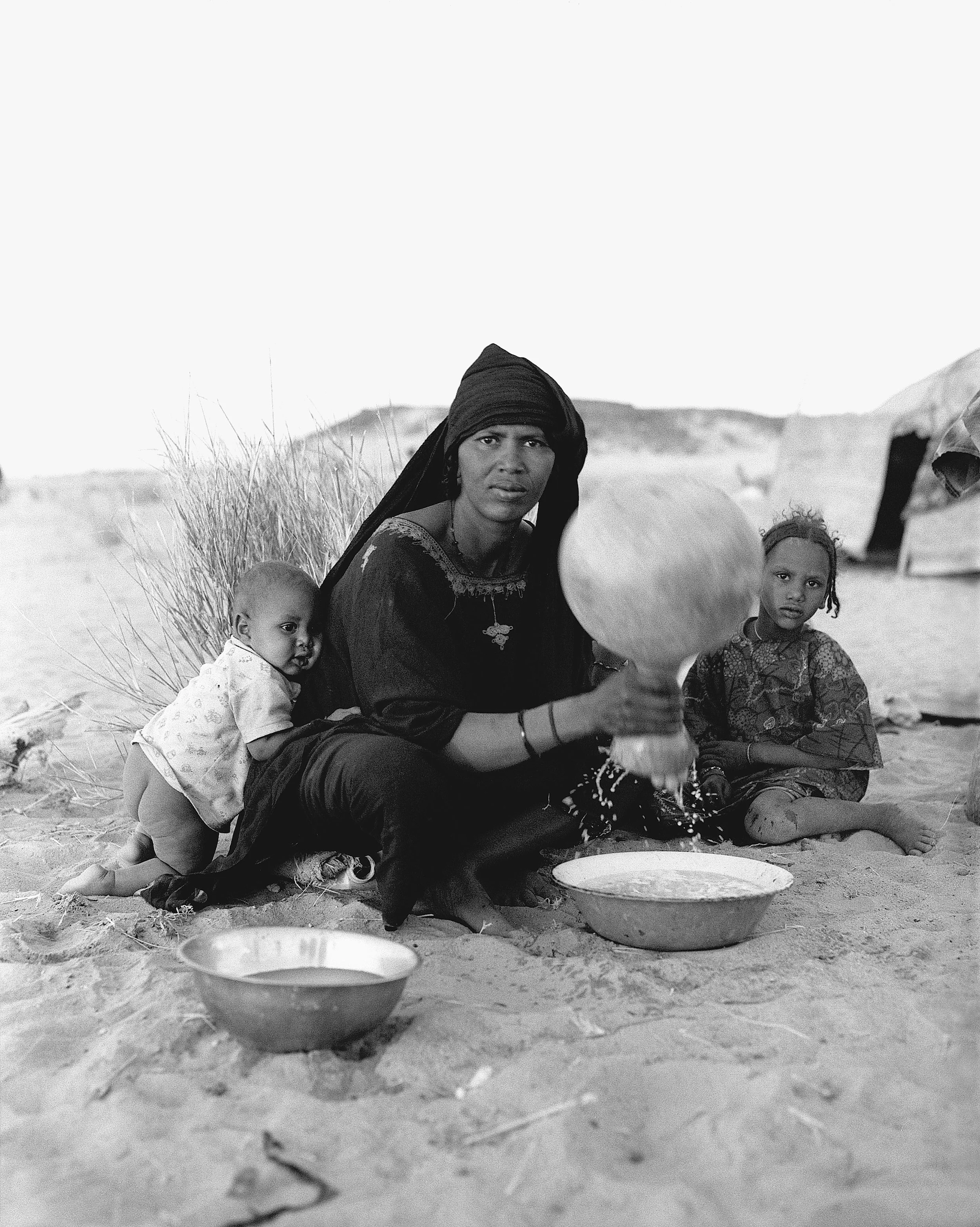
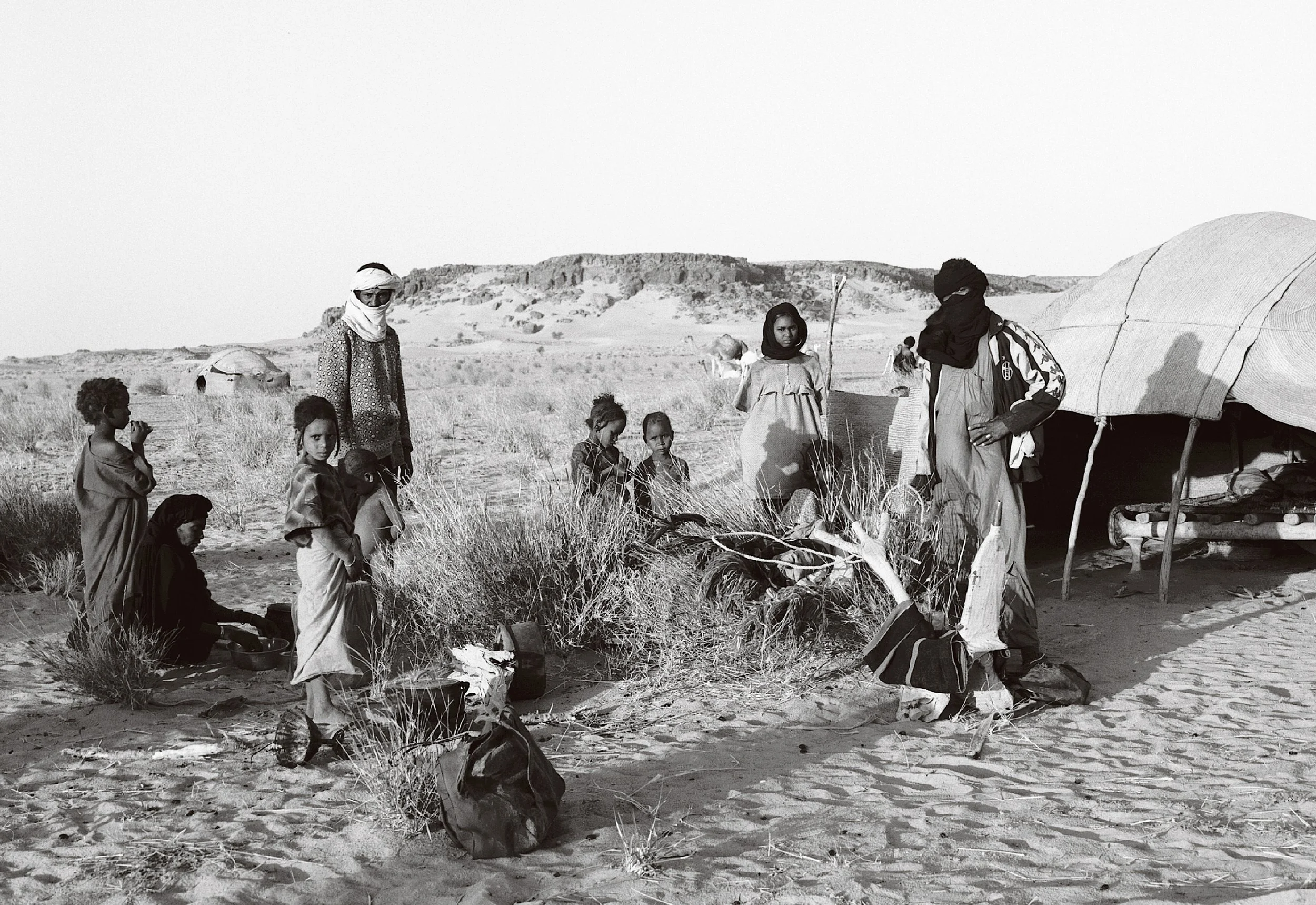
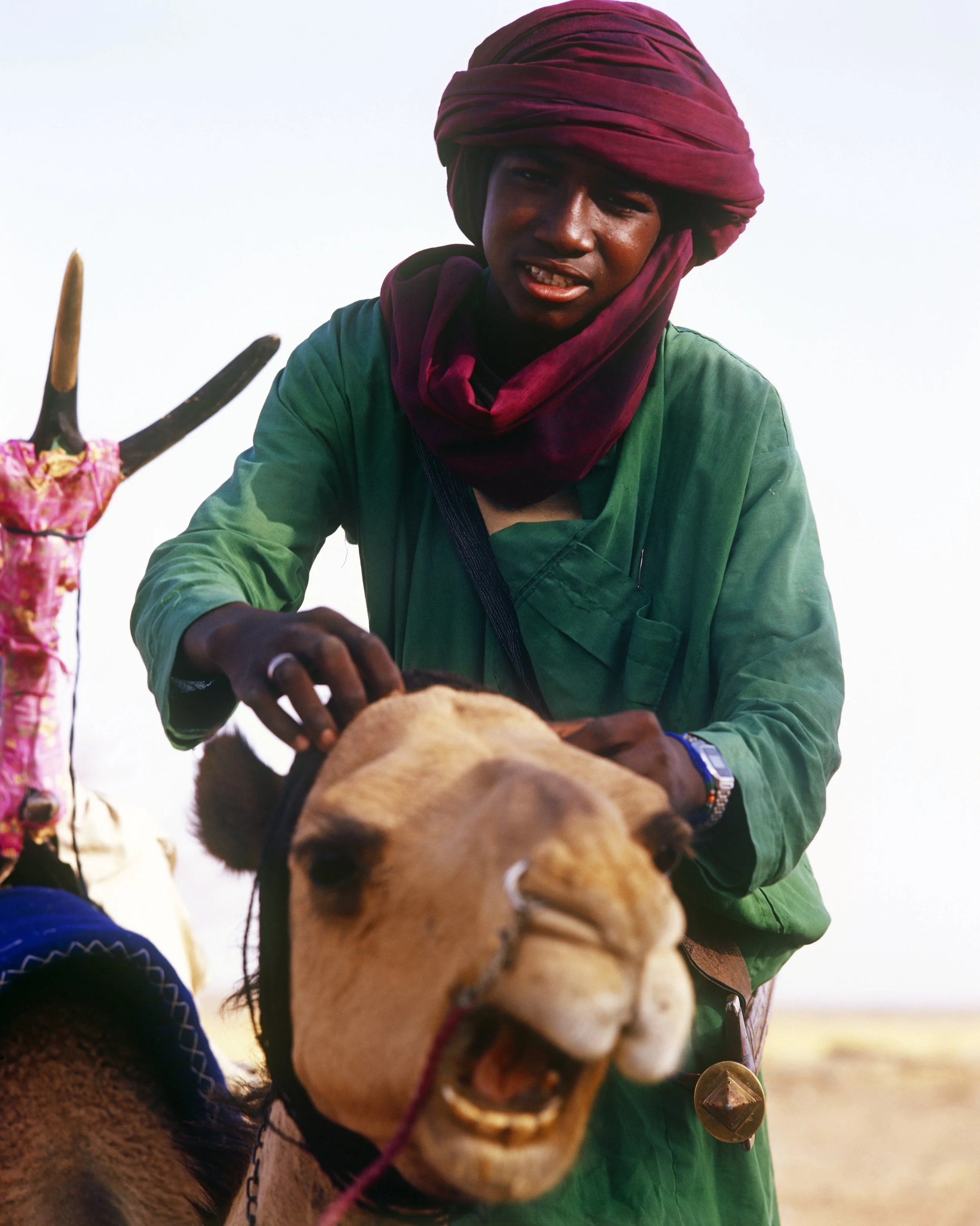
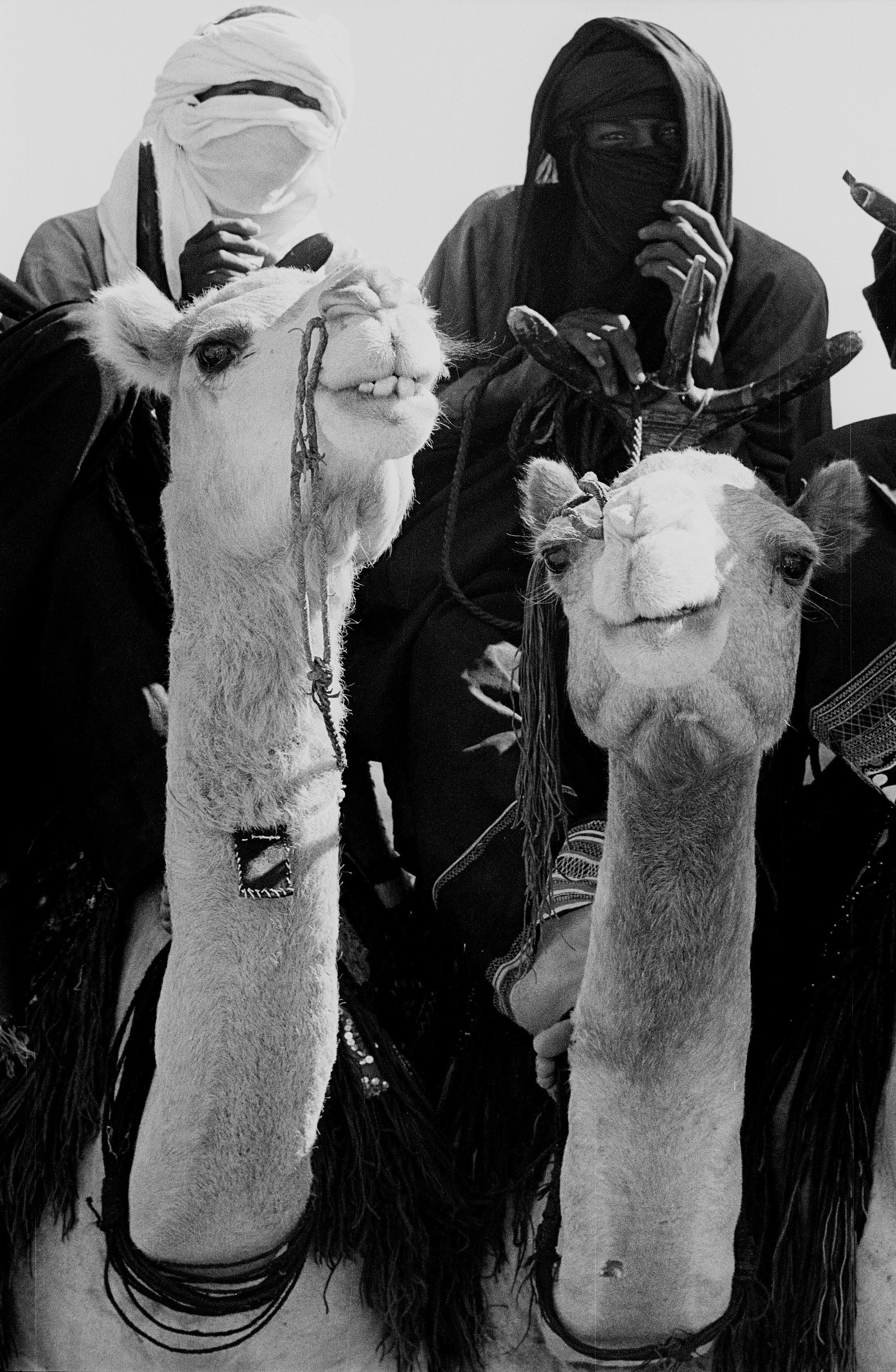
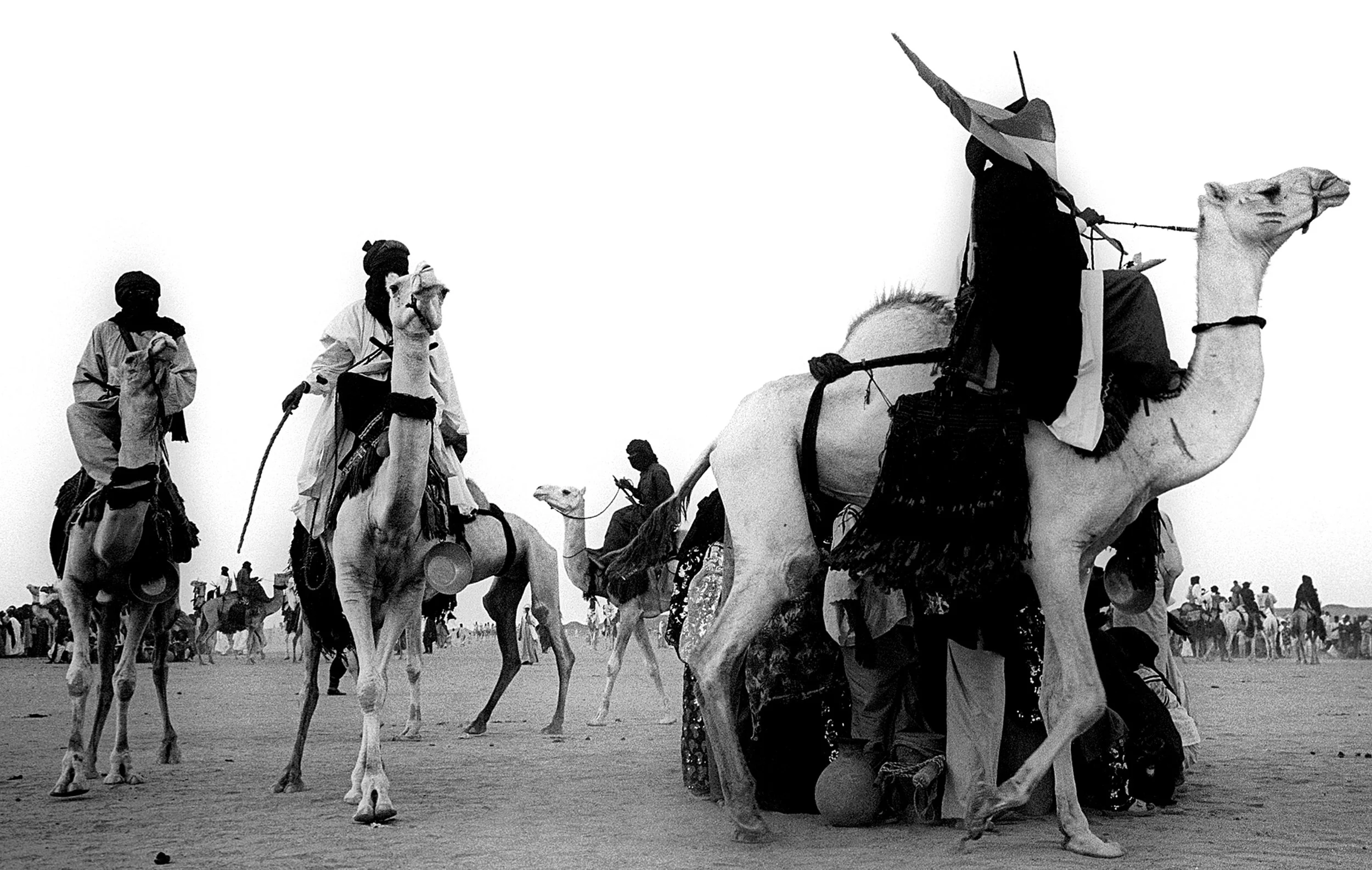
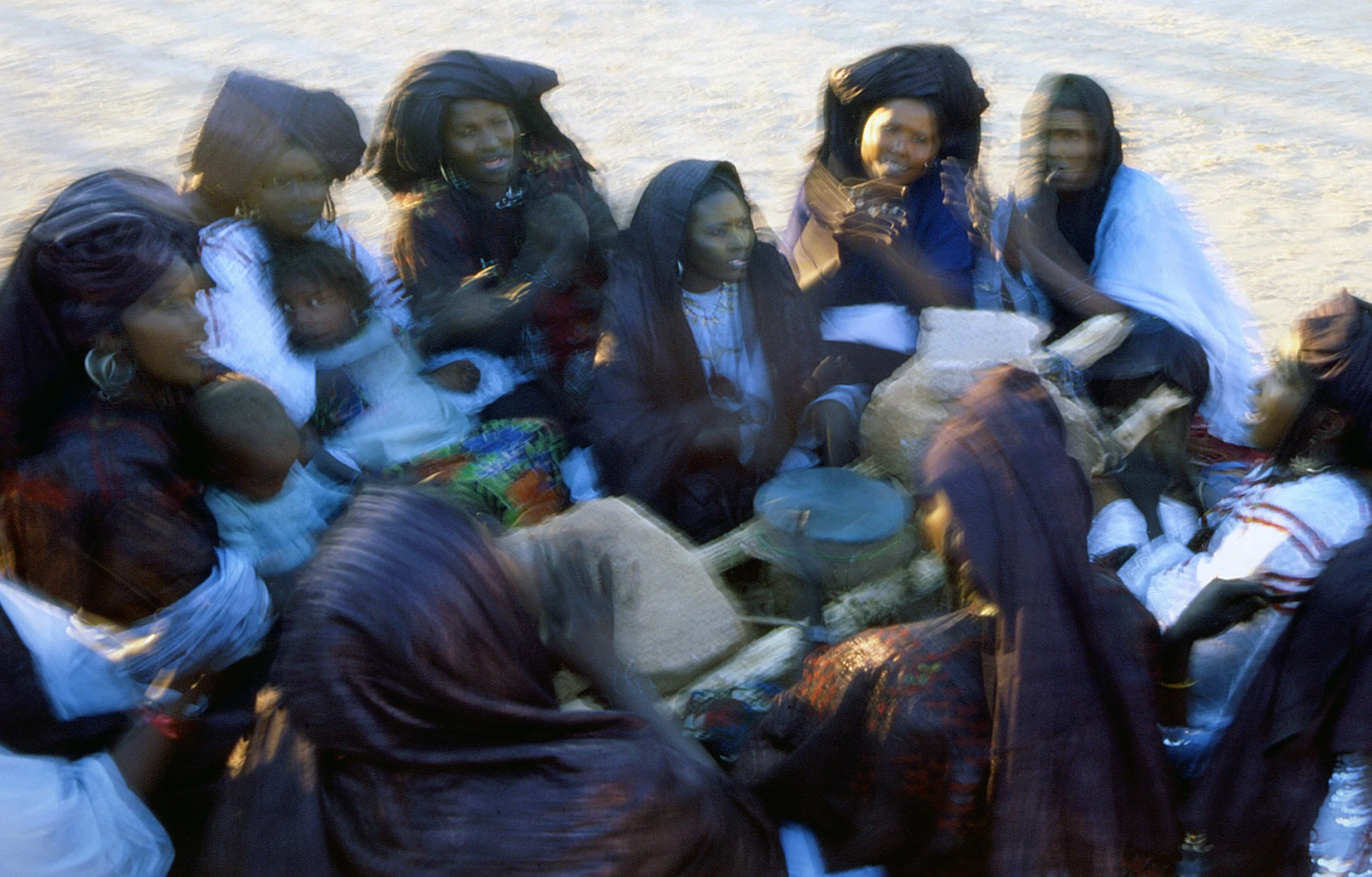
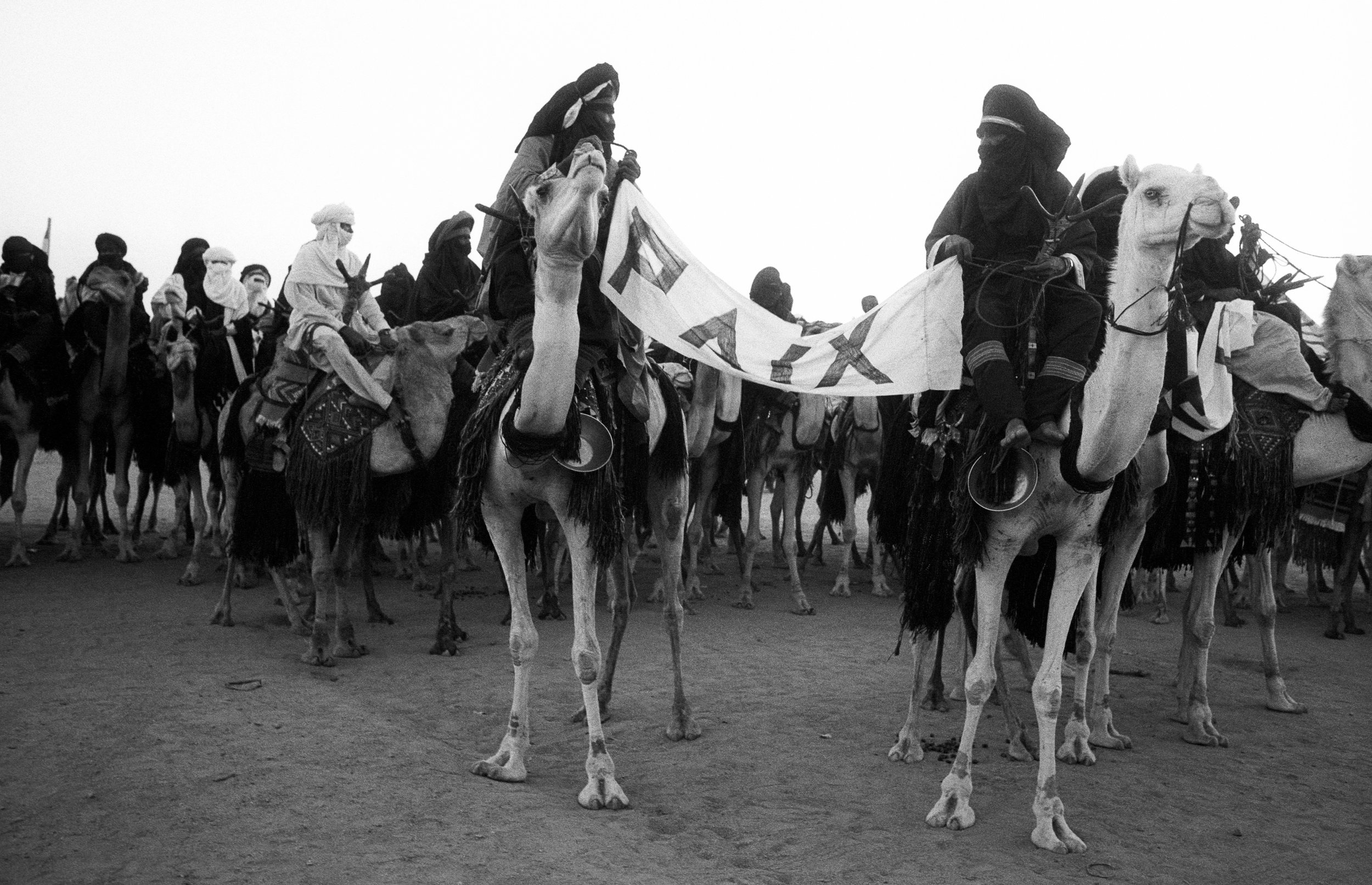
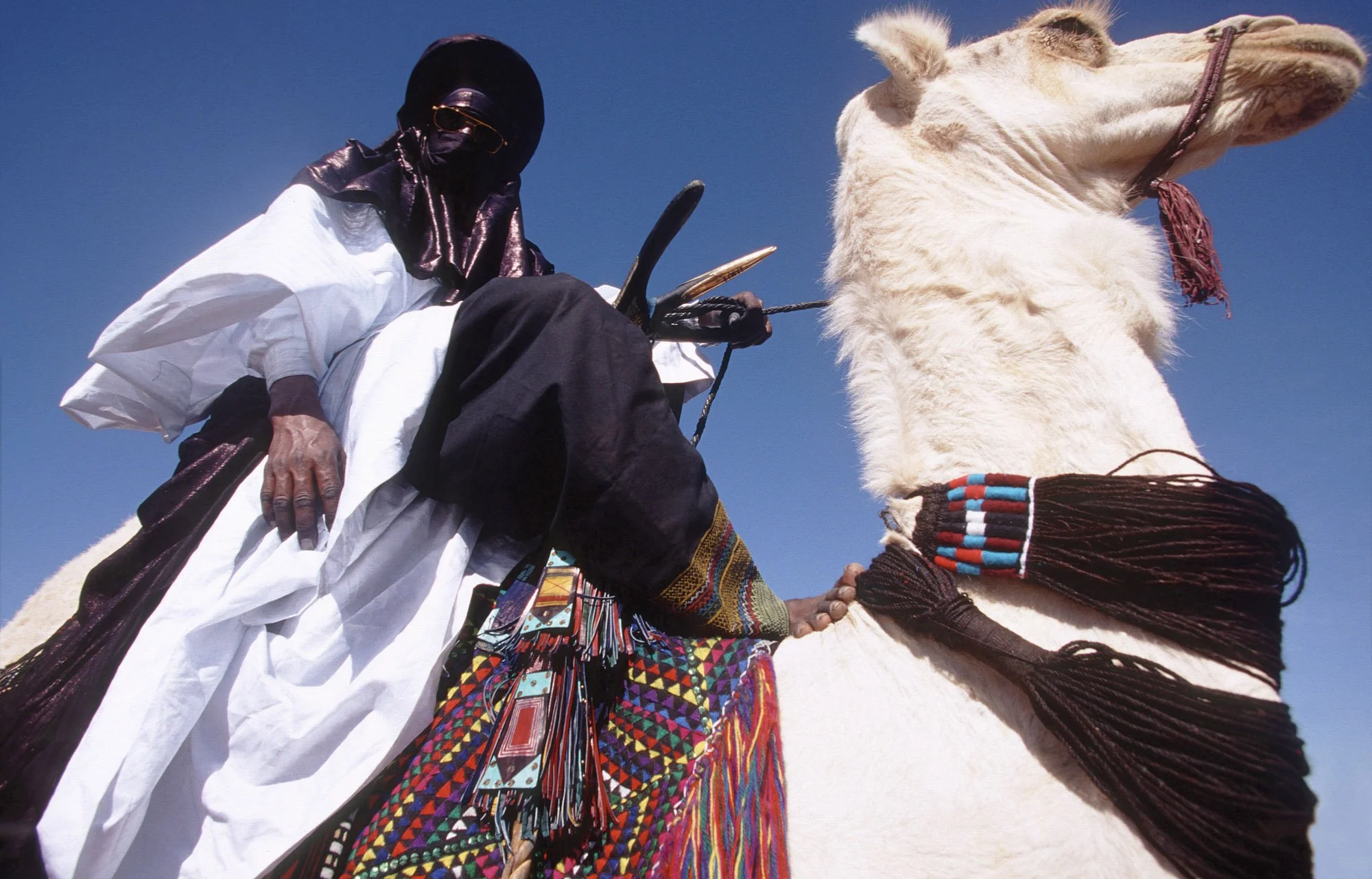
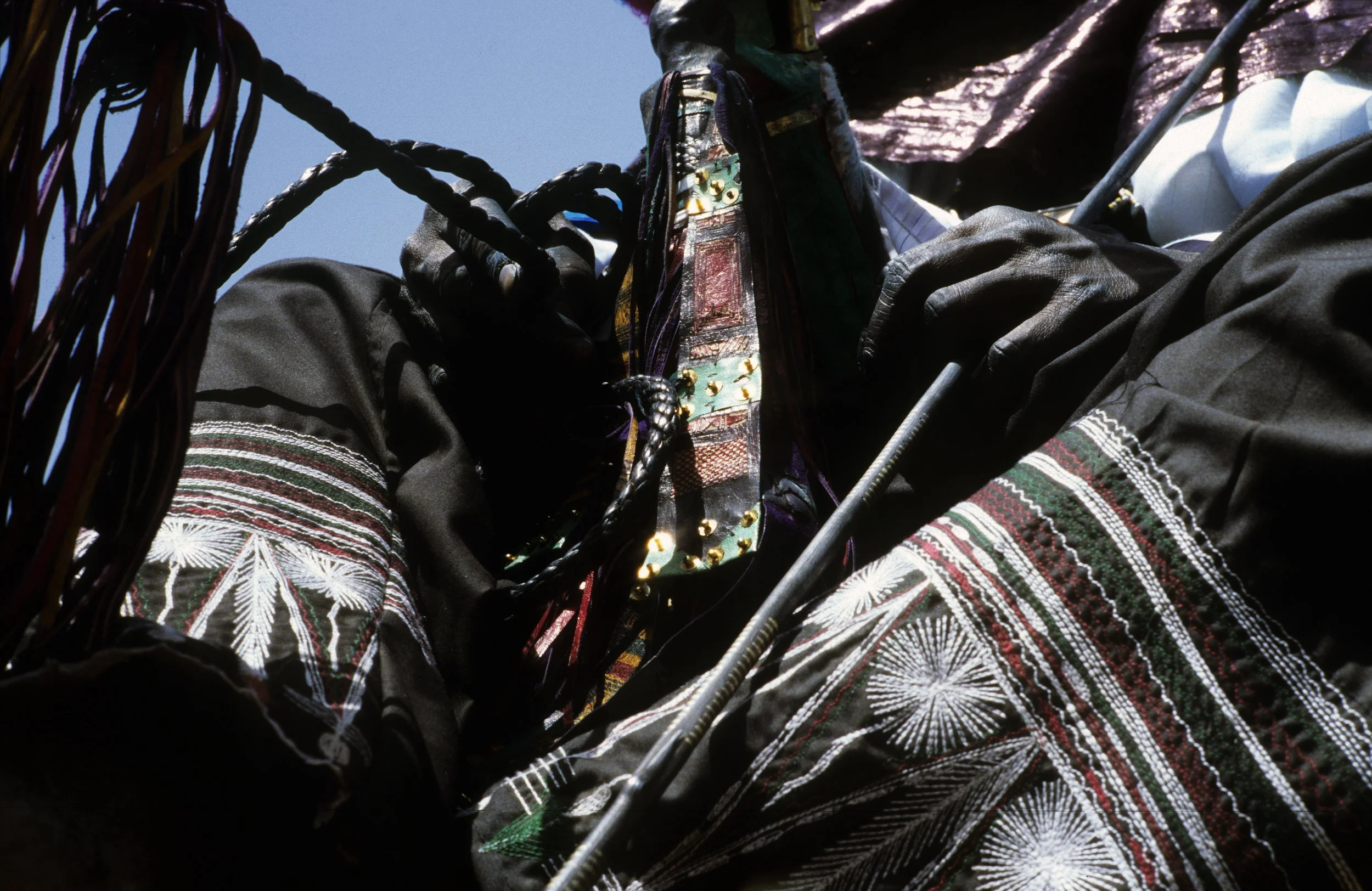
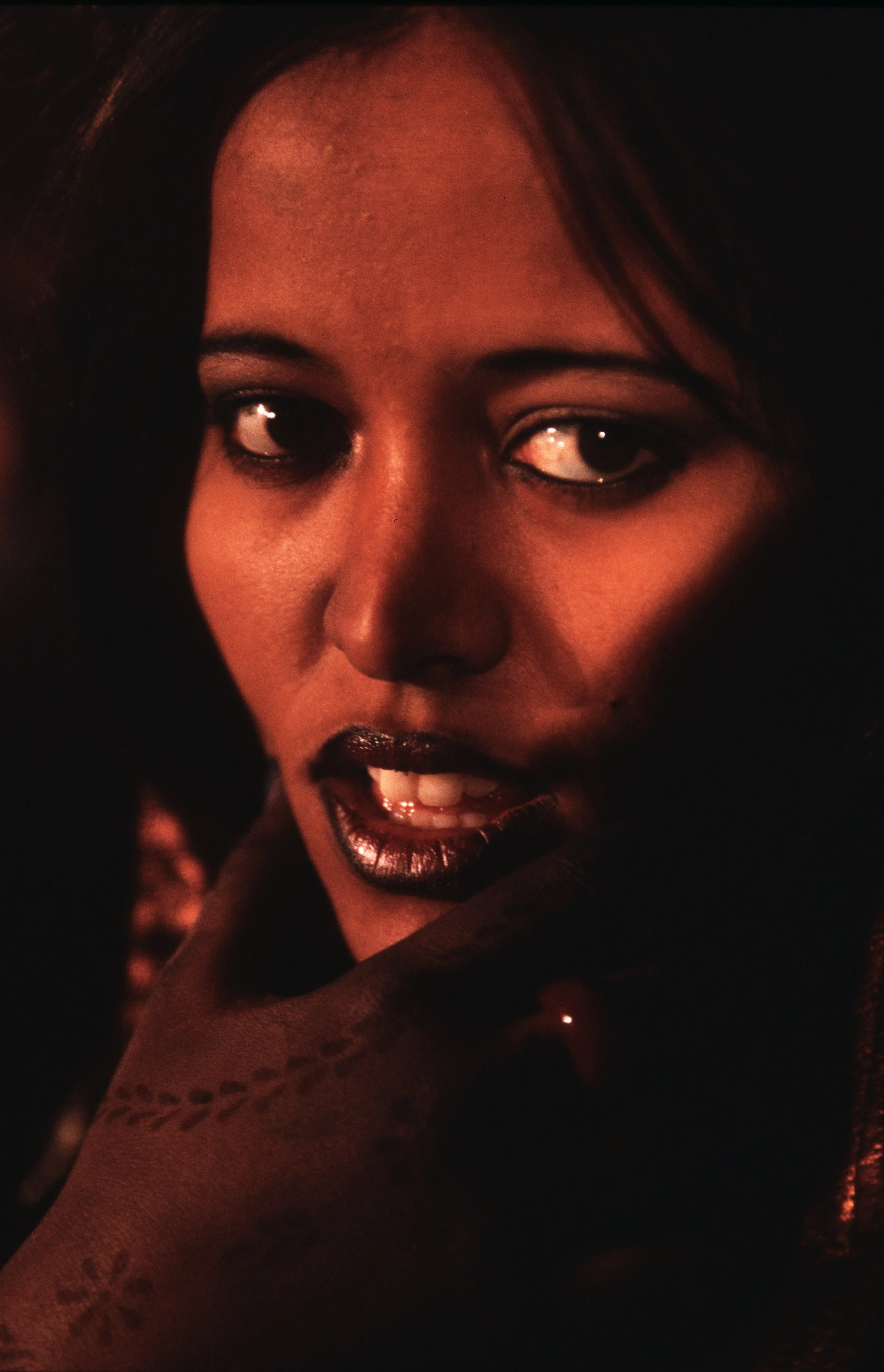
An anonymous woman's skin is likened to trees and plants refreshed by recent spates of rainfall. The poem is an ode to the Sahelian plant kingdom, which is continually threatened by drought
Recorded by Edmond Bernus, Fagoshia, Niger. November 1986
Her skin looks like imadarsalan that no one yet has touched,
Her skin is like the soil of the teneden caressed by the flood,
Her skin looks like the tuft of agargar that blossoms in a land full of water,
Her skin is like a young evergreen tabszgint covered in red berries,
Her skin is reminiscent of a tedey which has struck a thick cloud,
Her skin is like young tidarsen after a shower of fine rainfall,
Her skin is like the little afagag of Agogh to which the gazelles flock.
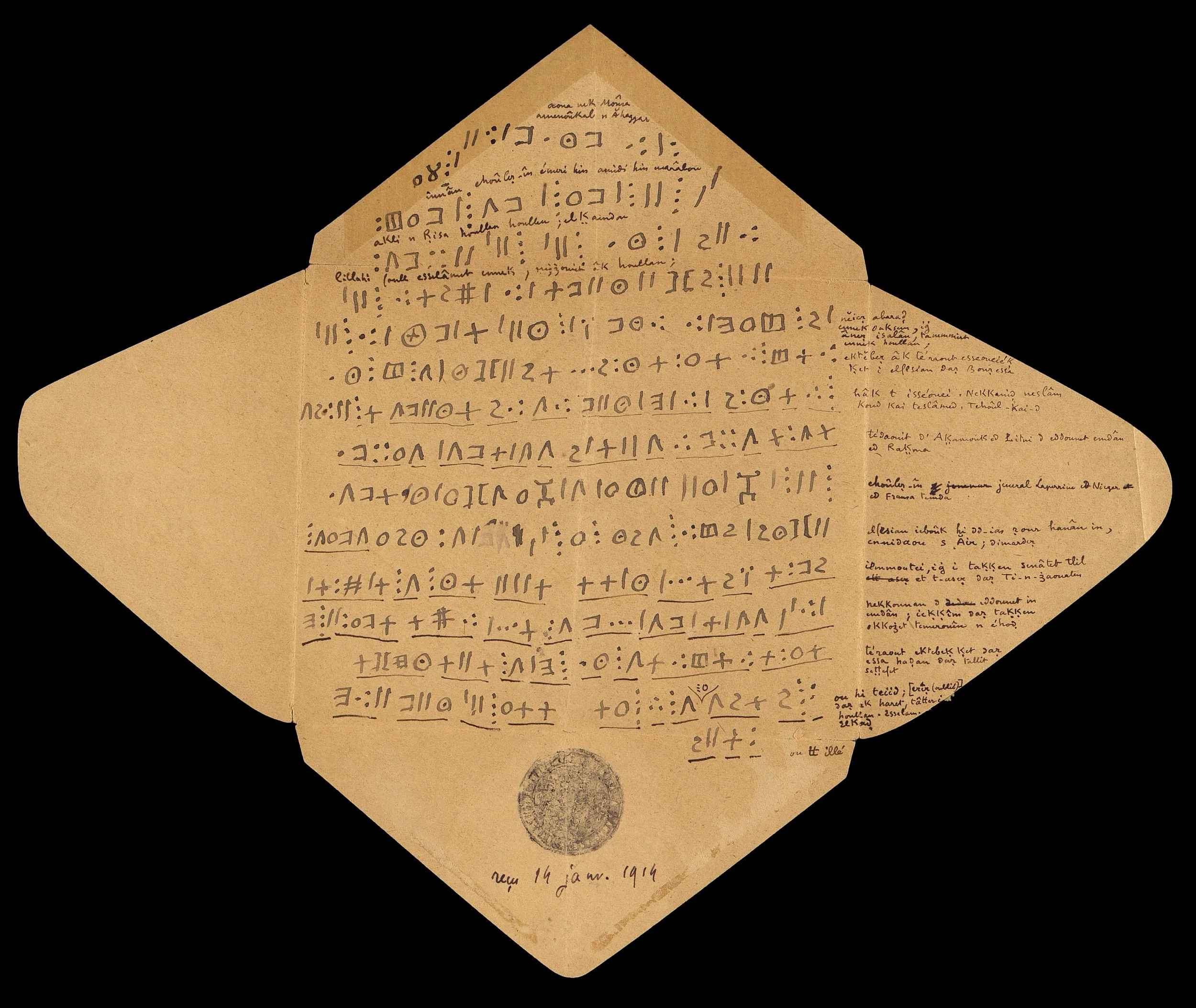
Letter from Moussa ag Amastan to the Père de Foucauld,5th January 1914. With Foucauld’s translation from the tifinagh on the right
©BULAC
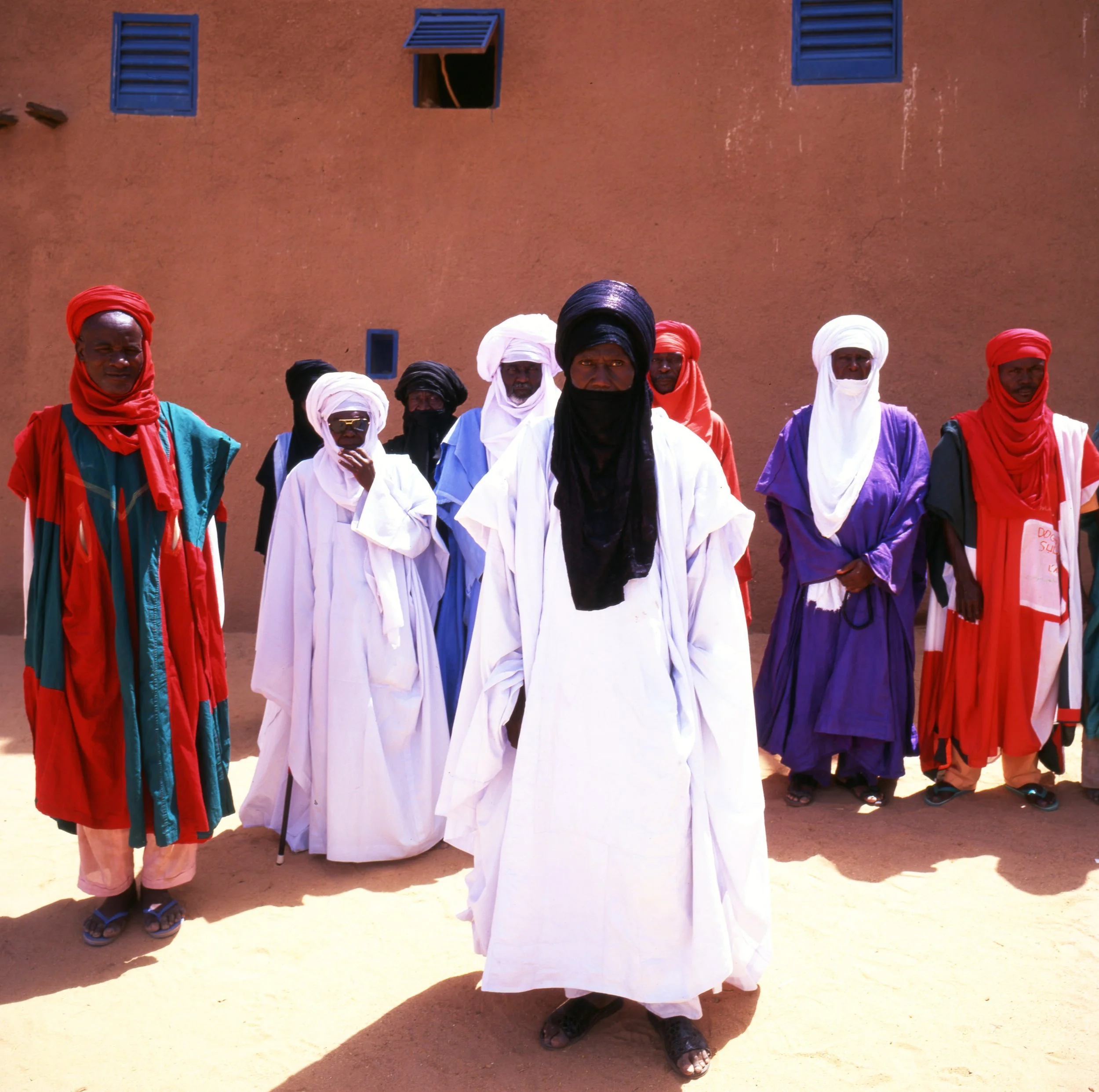
With Tuareg dignitaries in the courtyard of the mosque at Agadez before Friday prayers. The men in green and red are the Sultan’s guards
The Sultanate dates back to the 15th century. The first Sultan came from Constantinople at the Tuaregs request—they needed a referee for their disputes. Crucially, the Sultan is not a Tuareg. The old Sultan was a direct descendant of the first Sultan. Ibrahim ibn 'Umaru served from 1960-2012, when he died
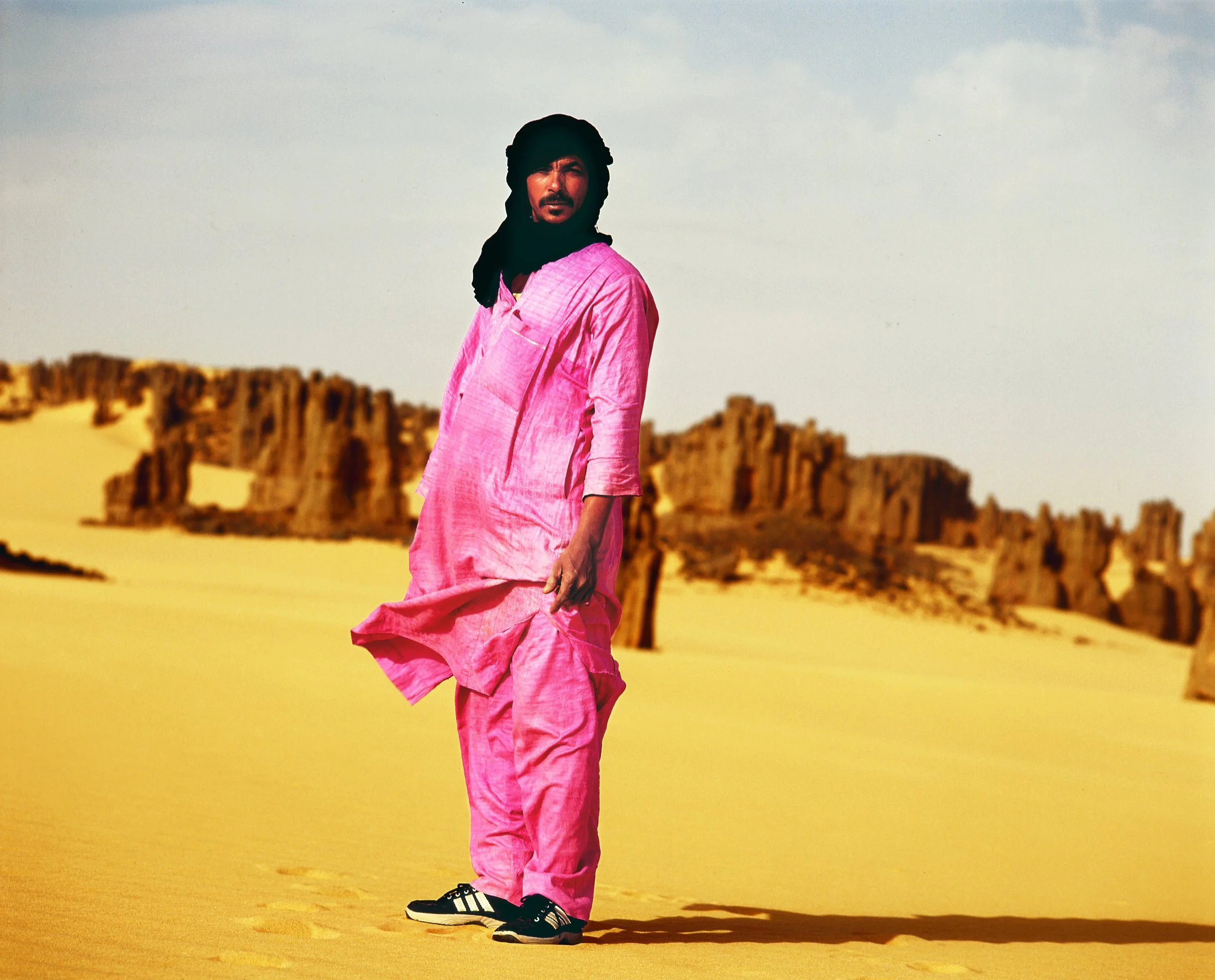
Our life was the most beautiful,
a life of liberty and space.
Today we no longer have the choice
It is death or half death
Mohamed ag Mahmoud
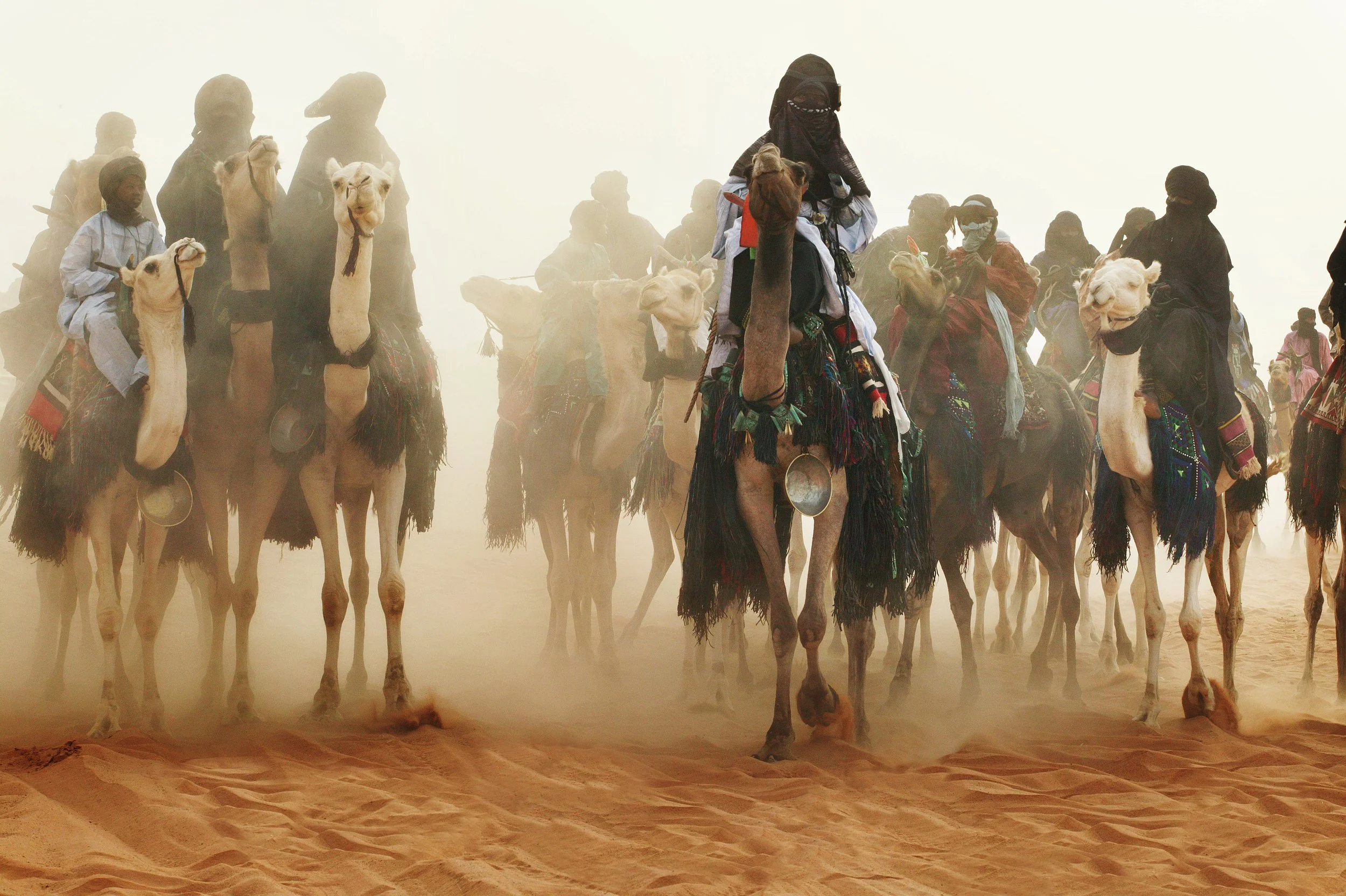
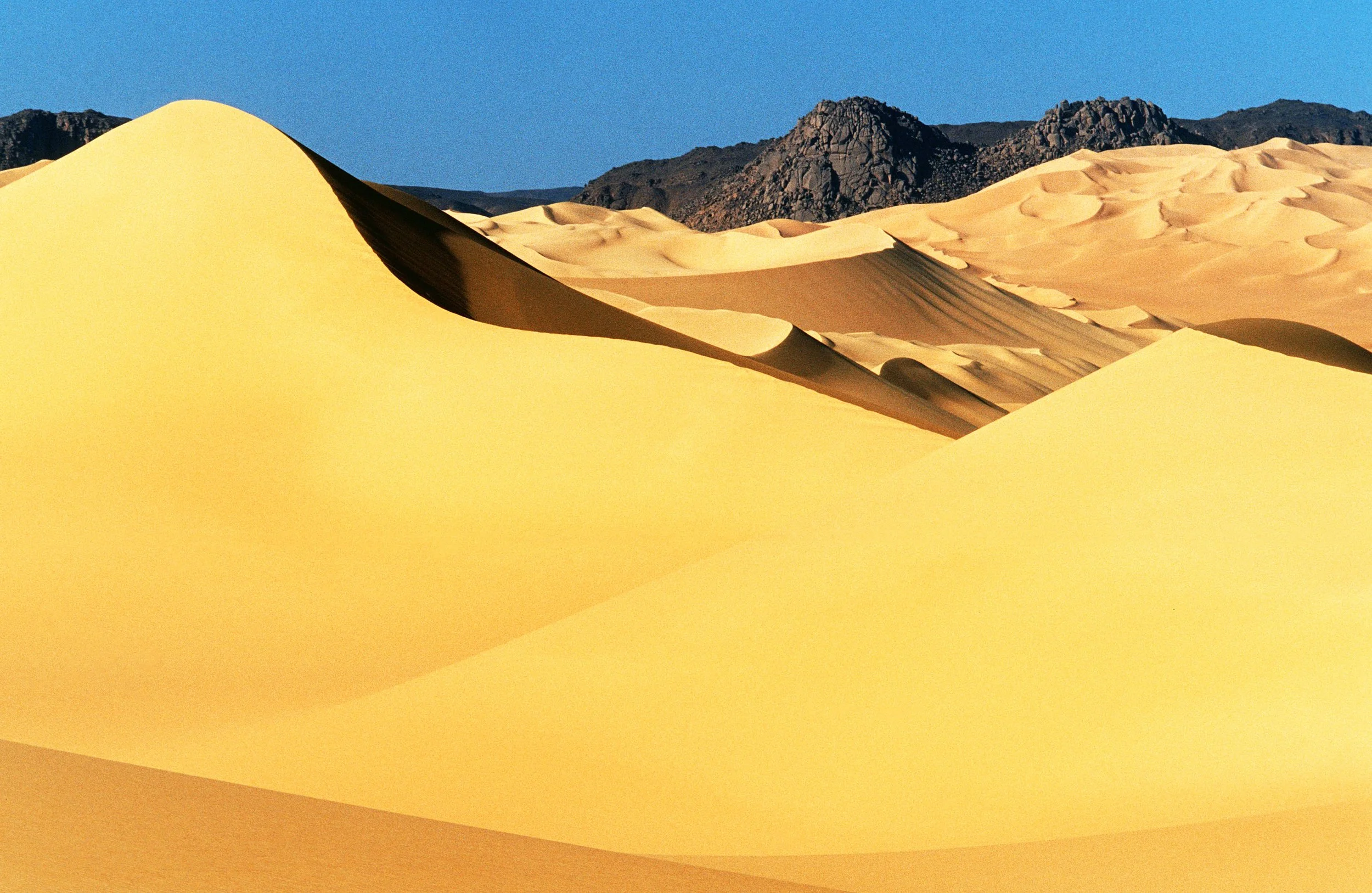
In a real desert, even the jackals cannot survive—one finds only the addax and fennecs, animals created by God to remind man of his limits
Sidati Ag Scheik
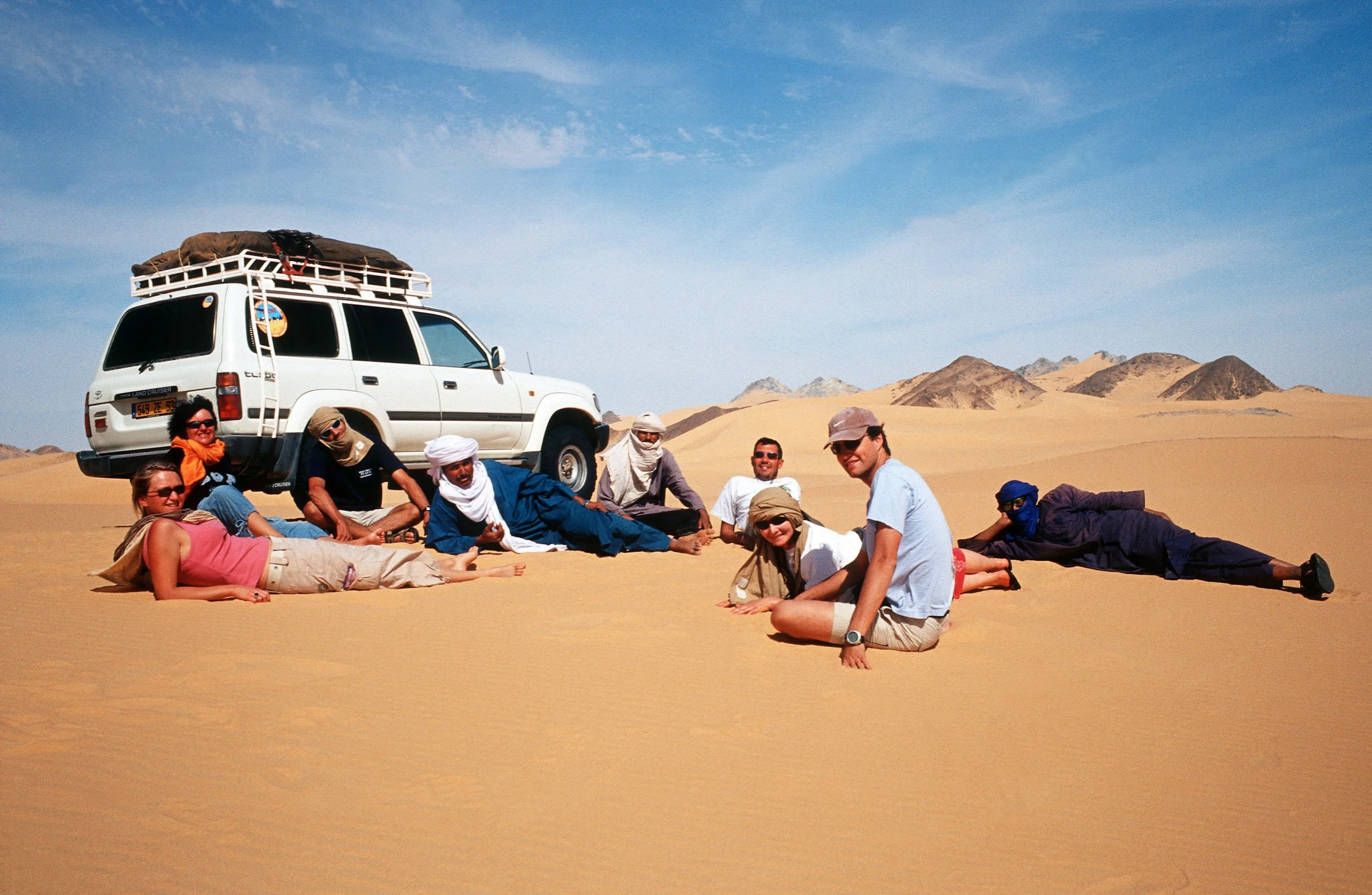
The Blue Mountains, on the edge of Niger’s Ténéré desert
Tourism in Niger is no longer possible
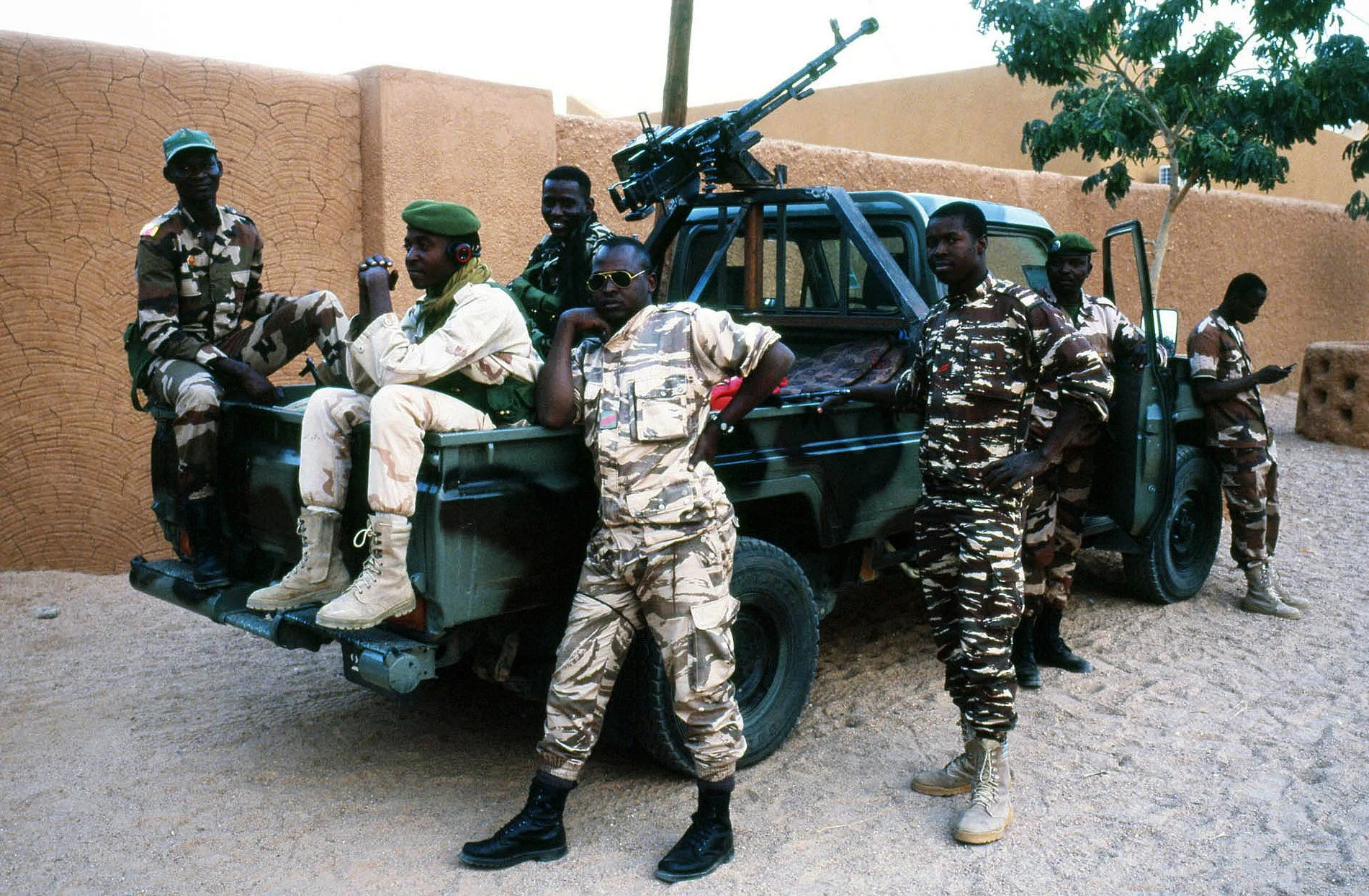
If you can afford it, security to go out of Agadez is obligatory
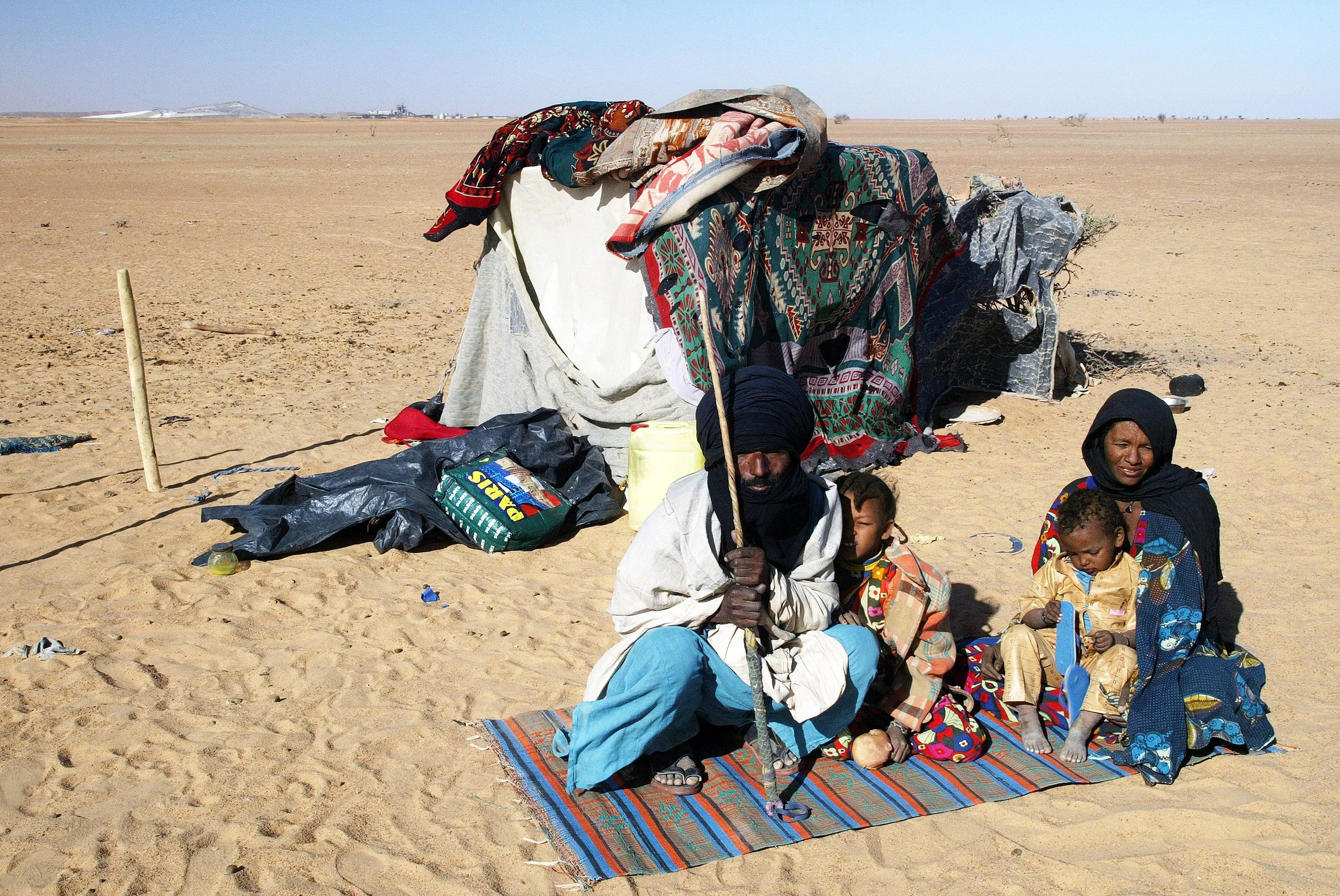
Tuaregs who have lost their animals become urban refugees. Knowing no-one in Arlit, they camp near Arlit’s uranium mine
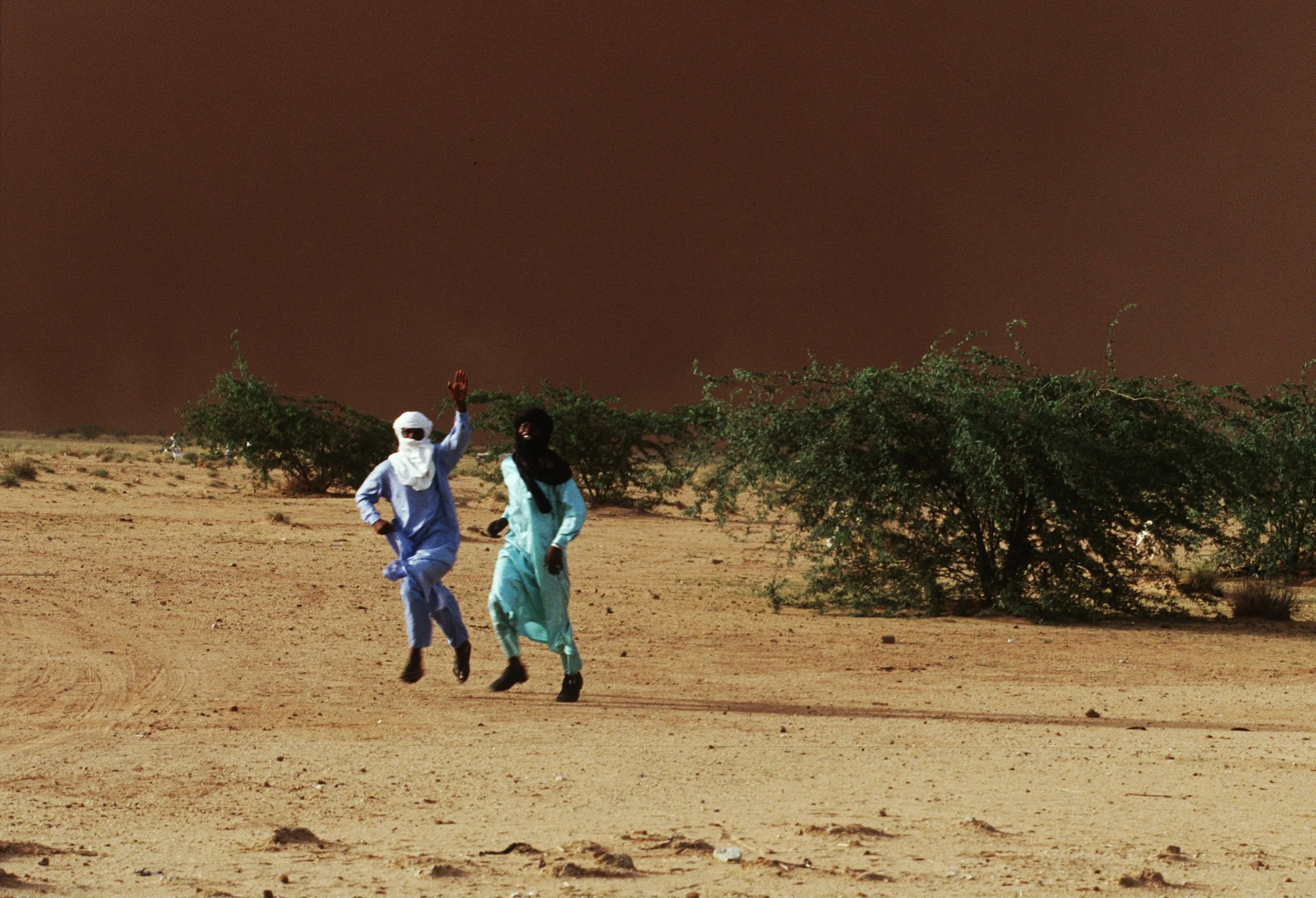
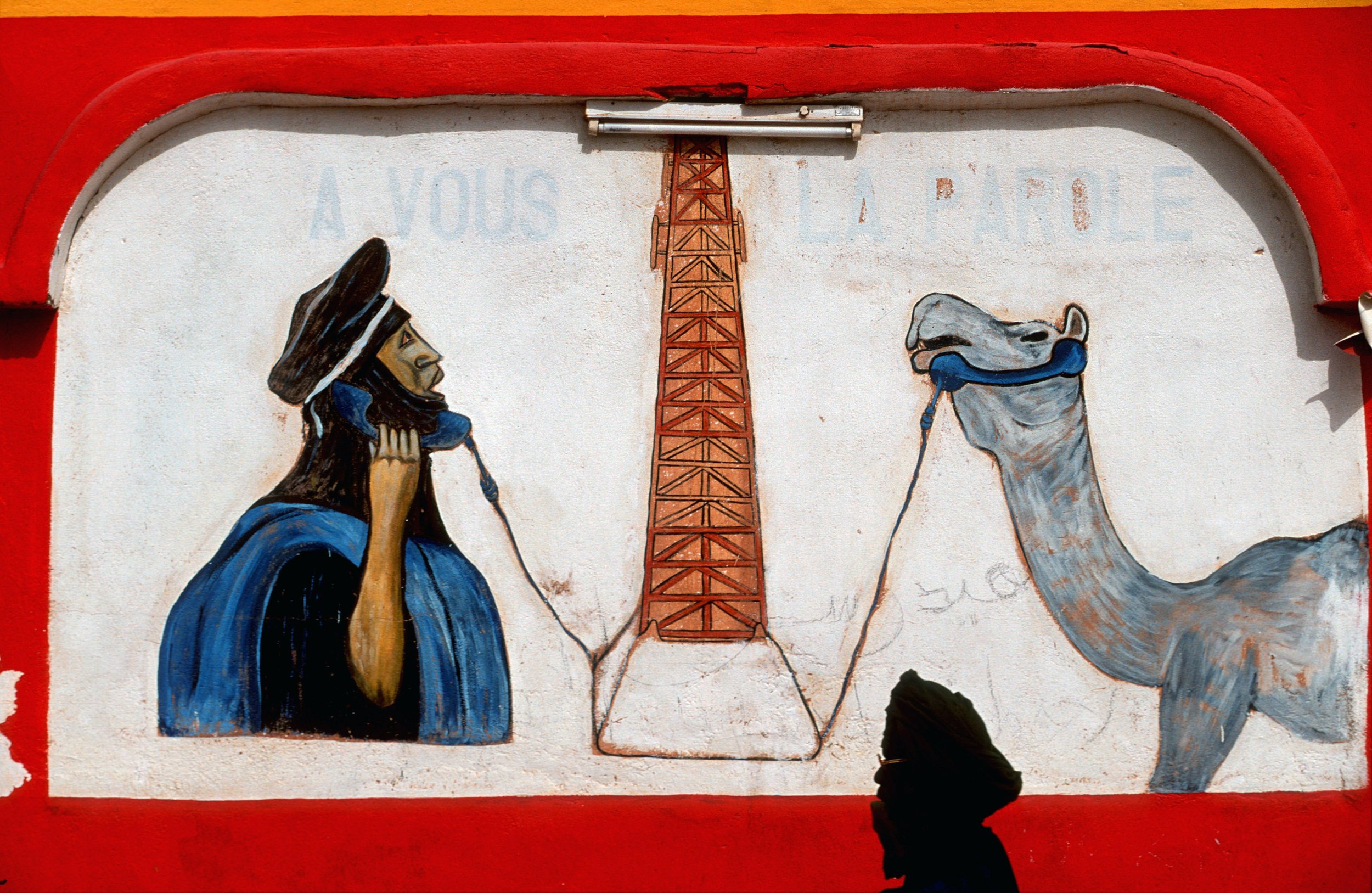
Mon chameau acajou me demande en bramant :
“Penses-tu compagnon, que nous serons à temps
À la fête joyeuse où l’on bat le tambour,
Où les filles du choeur, en suivat sa cadence,
Soutiennent la soliste et frappent dans leurs mains?”
Une est celle que j’aime et sa bouche est rieuse ;
Pareille à une liane entremêlée aux branches
Qu’on voit s’épanouir à la cime des arbres,
Dieu l’a mise au-dessus de toutes ses compagnes,
Ces filles dont le teint fait paraître plus pâle
La feuille du séné à la bonne saison,
L’alwat lorsqu’il fleurit sur les terres humides,
Les pousses d’emshéken lavées par la rosée,
Ou l’herbe d’ãgaljam dans la plain abreuvée !etc…
By Kourman of Aïr, Niger (d.1989)
Transcribed from the Tamasheq by Dominique Casajus